Blog

  • 6 Reasons Why Dance Can Help You Better Your Mental Health

    6 Reasons Why Dance Can Help You Better Your Mental Health

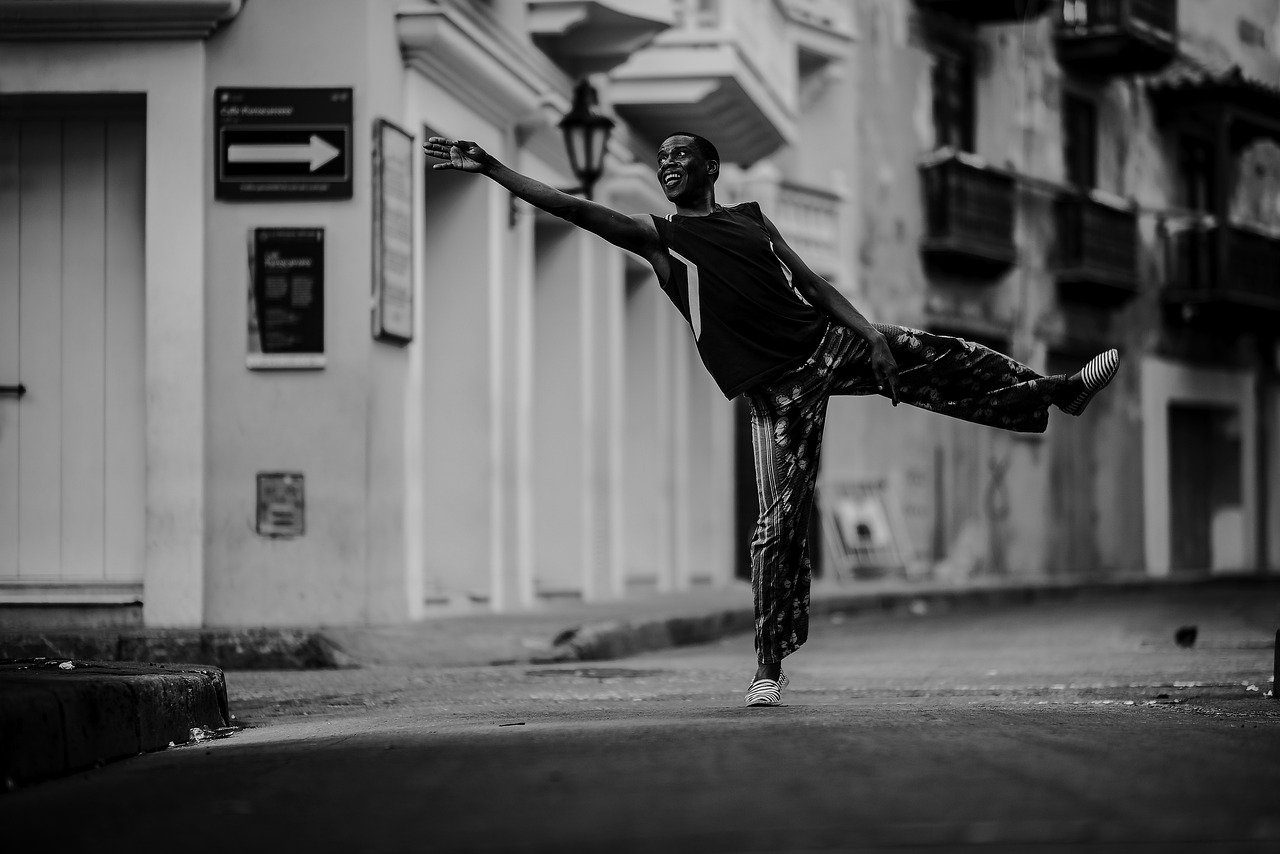
    Dancing is an inherent part of humans, from the early days of civilization to today, dance is always present in one form or another. Dance also has proven benefits for your physical health, like keeping your levels of stamina high due to sudden outbursts of energy and movement and improving your balance and coordination.

    So what about your mental health? It’s no secret that physical activity is a key component of a healthy mind, and many therapists and psychologists recommend daily exercise to cope with stress and anxiety. Dance is particularly beneficial for your mental health though! If you want to find out why, keep reading!

     Sport vs creativity

     Dance creates the perfect balance between sports and creativity. Have you ever gotten bored of running on a treadmill or doing endless sets of burpees? Dance has a hugely creative component that distracts you from the enormous physical exertion you’re doing. On top of this, the feeling of nailing a difficult choreography is second to none!

     Dance is used as a therapeutic expression and social anxiety therapy

     Research on this topic has been carried out by scientists for the past thirty years, but recent findings have become a lot more conclusive in just how helpful dance can be in therapeutic expression and social anxiety therapy.

     Rita Lee, a psychology blogger at Paper Fellows and Boom Essays tells us- “Dance helps people loosen up and eventually feel comfortable performing in front of large audiences made up of total strangers. Dance provides an artistic portal where people who struggle to voice their emotions can do so through the movement of their bodies”.

     Dance gets you in a great mood

     Research suggests that even one lively dance session can greatly help with conditions such as depression and anxiety. Research has proven that when performing the activity of dance, your brain releases feel-good chemicals in abundance. This happiness is not only felt whilst dancing, but is noticeable long after the session is over, so if you want to put yourself in a great mood, take the plunge and go to a dance class!

     Dancing helps you become more body aware

    Most of the time, people don’t realise they have a bad body posture, or bad habits when it comes to sitting or standing and balancing their weight. When you dance, you activate muscle groups that aren’t used all that commonly in day to day activities. This makes you a lot more aware of your body.

     James Woods, a lifestyle writer at Essay Roo and State of writing tells us- “On top of this, injury prevention practices common in dancers will help you be more aware of your aches and pains, and listen to your body more frequently.”

     Dancing is all about the community

     There is research that suggests that dancing alongside others, who you may have considered strangers at one point or another, light up mental pathways that tear down walls and increase the connectedness you feel with them. This lends itself to easier social interaction amongst yourself and your dancing partners. On top of this, dance groups and classes tend to naturally be social environments where making new friendships based on common interests is very easy and rewarding. Accomplishing a performance as a group is a very bonding experience that can create a sense of togetherness very difficult to achieve in other environments.

     Dance reduces depression

    Depression can be a life-altering and sometimes devastating condition. Treating depression can, unfortunately, be tricky as well, with no one size fits all prescription or therapy. There is however research that suggests that dance can be a great tool to reduce depression. Researchers tested this by prescribing a 12-week dance course to people who had recently been hospitalized due to depression. The results reported that most of those people saw a significant reduction of their depressive symptoms, and their quality of life improved significantly.

     Summary

     Dance shouldn’t replace therapy or medications where they are needed. However, dancing can be a fantastic tool to combat the symptoms of anxiety and depression, and can also just improve your mental health and mood, having a great day has never been easier!


    Elizabeth Hines writes about the latest tech and marketing trends, innovations and strategies. She also writes for online magazines and blogs, such as OX Essays, and others. She Hines is a digital marketer and content writer at Dissertation help and Academized.



  • Finding A Life Purpose (And why it matters for our anxiety and our humanity)

    Finding A Life Purpose (And why it matters for our anxiety and our humanity)

    What gives you joy and makes your heart happy?  Is it animals, little children, your partner, your work or your hobby?  Whatever it is, it is a golden thread that you can follow throughout your life to keep you in touch with who you are and why you are here.  Many of us are searching for our life’s purpose.  For some of us, it may mean something ‘big’ while for others it will be in the simple, more humble or domestic areas of life.  We are all created uniquely and individually.

    We all know this and derive a sense of dignity from this.  And so we should.  At the same time, it benefits us to consider what makes us a little ‘different.’  Maybe for those of us who have anxiety, it gives us an ‘edge’ in what we do, who we are and in our relationships.  As long as it is healthy and takes us in a positive direction and we are growing, then all is well.

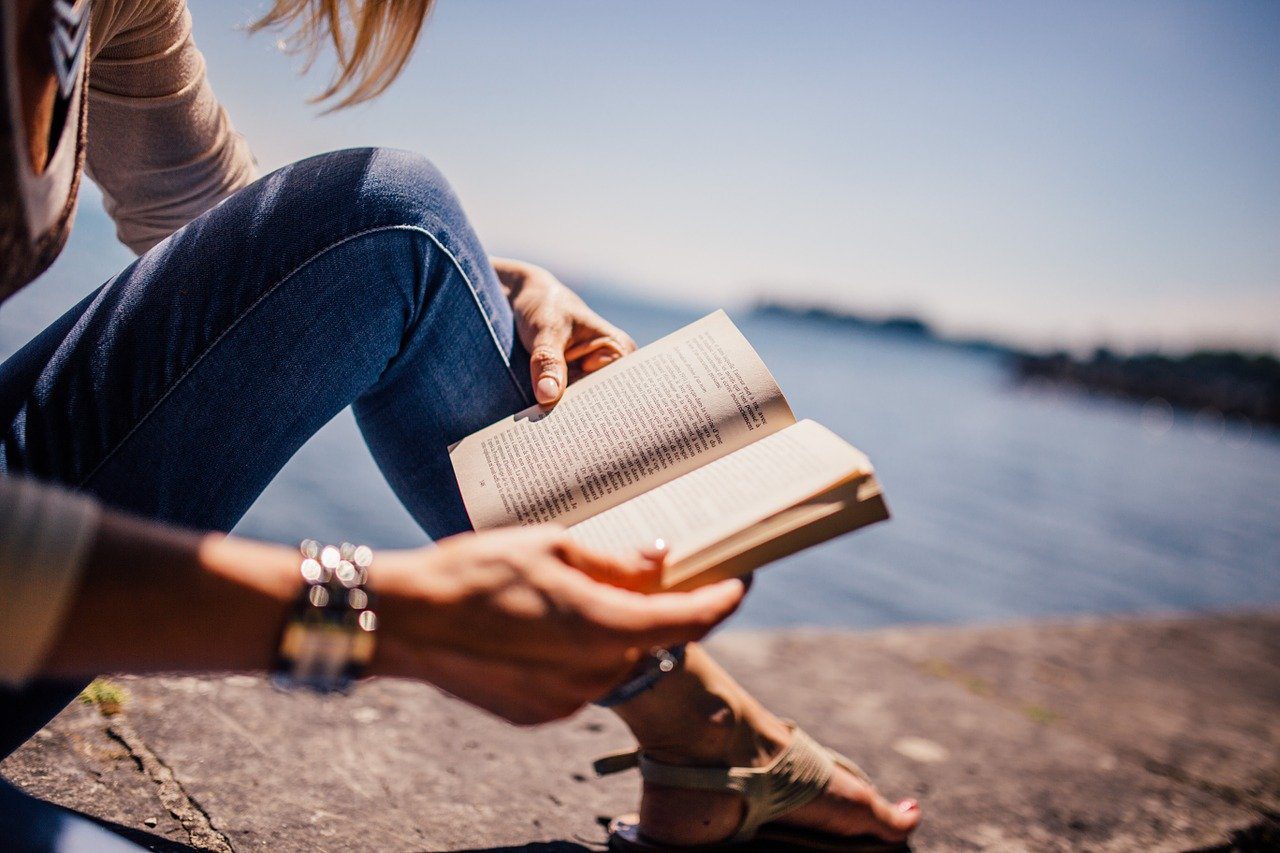
    But what if we are not growing?  What if we are stagnant, frequently bored, unsatisfied or restless?  What do we do then?  I have a gentle proposal.  Since summer is here, we may have a bit more time for some leisurely reading.  Of course, what we read and like to read is personal, so this is only my suggestion and here it goes.  

    Some time ago, I read a wonderful fiction book called, ‘The Bookshop Of The Broken Hearted’ by Robert Hillman.  I think this may be of help to those of us with anxiety.  A good book that engages our imagination and empathy will take our minds off ourselves and consider the lives of others.  This book is intense, heartrending and passionate.  

    Personally, I have a little theory that some of our anxiety may have been caused by a broken heart somewhere in our past.  What that cause is and where it occurred will be different for each one of us.  But it made us feel less secure, less safe, less trusting and therefore more prone to anxiety.  (Of course, some of us may have been born a little more sensitive or with an anxious disposition but that is a separate matter).

    This book can take us on a journey of the heart where we can remember and reflect on how we too have suffered a broken heart.  It can offer some hope in how this can be redeemed in surprising ways.  There are many overcoming books for anxiety-related subjects but sometimes we need a compelling story with a message that we can extract for ourselves.  Fictional characters and stories can be good medicine for our parched souls.  

    As we let some light into our lives by reading about them we may feel stronger to be open to fresh ideas and new beginnings.  In time (and it can take some time) we may be able to discern and discover what our purpose in life may be.  Big or small, it will be ours and this can change our destiny.  A worthy purpose will also ripple out and help other people who need what we are and what we have to offer.  Good luck to all of us!

    Mary Peters

    How can No Panic help?
    No Panic specialises in self-help recovery and our services include:
    Providing people with the skills they need to manage their condition and work towards recovery.
    Our aim is to give you all of the necessary advice, tools and support that you will need to recover and carry out this journey. No Panic Recovery Programs

  • After the Storm – Life after Covid-19

    After the Storm – Life after Covid-19

    As the masks come off, social distancing seems like a distant memory and the headlines are no longer Covid based, some of us are left with anxiety or panic in the aftermath. Whether that may be obsessive-compulsive disorder, worried about being contaminated or causing others to catch the illness or people having panic attacks due to the streets getting busy again, it is clear that Covid is still riding roughshod on our mental health.

     For some of us, the lockdown was a positive experience. Given the opportunity to stay at home and avoid anxiety triggers, it was an excuse to allow rituals to reappear and to stay away from panic-inducing situations. 

     So where does that leave us in this post-Covid world? Our symptoms may not yet have gone away but our lives have to return to a semblance of normality. Here are some tips we’ve put together to facilitate those with mental health disorders to reintegrate society gradually and safely.

     CBT (Cognitive Behavioural Therapy) is the gold standard when it comes to dealing with anxiety. Try challenging yourself every day – whether that is a bus ride or just taking ten steps outside your house. Slowly but surely the anxiety will fall and as you push yourself just a little more each day.

     Confinement is also a very lonely experience, especially for those who have to self-isolate. Reconnecting with old friends can be a joyous occasion but it’s also a chance to make new friends. It might not feel like it but there are a lot of people in the same situation as you. Push yourself a little bit past your comfort zone. Always loved singing in the shower? Join a choir! Never miss a footie match? See if you can find a 5-a-side team!

     One important thing to remember is that Covid is not going to disappear. If you have health anxiety it’s easy to fall into the trap of watching the news on a loop and constantly checking facts and figures. We must all avoid Dr Google! If you find that social media and its non-stop intrusion difficult then don’t feel bad turning your phone and computer off until you feel ready to face them again.

     Remember that it will take time to adapt. Nobody expects you to return to the old normal overnight. Mindfulness is a great way to stay in the “new normal” and there are many tutorials on the web or applications on your phone. No Panic will as ever, be here to support you as we take this step forwards together. 

    How can No Panic help?
    No Panic specialises in self-help recovery and our services include:
    Providing people with the skills they need to manage their condition and work towards recovery.
    Our aim is to give you all of the necessary advice, tools and support that you will need to recover and carry out this journey. No Panic Recovery Programs

  • The Other Side of OCD – Violent Intrusive Thoughts

    The Other Side of OCD – Violent Intrusive Thoughts

    For quite a long time I refused to touch a knife. I would use a round-ended butter knife, but anything else was out of the question. It wasn’t a flight of fancy (like the fact that I love using drinking straws and eating with an ice cream spoon, both of which are true!) but because I honestly believed that if I were to hold a knife in my hand, I would stab and kill someone.

    Now I’m not a violent person. I once gave my brother a split lip (but I was about seven at the time and still claim that was his fault) and apart from that, I’m not one to lash out physically. I have no idea how to punch someone and with my total lack of hand-eye coordination, there’s a strong chance that I would miss anyway. And yet I was convinced that I was always a hair’s breadth from violently killing someone.

    These violent thoughts aren’t uncommon in OCD and can take on all sorts of different forms. One person may worry about whether they kicked their dog, another may think that they have smothered their child. One sufferer might worry about poking their partner’s eyes out and another may imagine themselves strangling strangers in front of them in a queue. They are all incredibly disturbing and they all have something in common – they are irrational. Nobody with this form of OCD will act upon these thoughts.

    The answer is, as with all OCD, exposing yourself to the very thing that you fear. For me, this meant gradually working my way up a hierarchy of the things that scared me – starting off by sitting alone with a knife in front of me and building up to using sharp knives whilst chatting normally and interacting with my family who were right next to me.

    Sometimes the things that you have to do to get rid of the OCD sound extreme – lots of people who don’t have OCD would say that they wouldn’t do it. But the point is that in order to disprove the theories fed to us by the OCD, we have to go to these extremes. In the same way that someone with contamination problems may be encouraged to wipe their hands all over a toilet seat and then eat without washing them (something that many would call disgusting), someone with a violent obsession may, as in my case, point a knife towards their therapist or someone else or stand over their sleeping child with a pillow in their hand. Once again, to those of you who feel that this sounds extreme – people with OCD never, ever act on their thoughts.

    Violent intrusive thoughts are so difficult to talk about. Telling someone that you’re worried that you might strangle them isn’t massively conducive to conversation and unless the listener has a good idea of what OCD is, they can sound very worrying. This is why it’s incredibly important to raise awareness of these sorts of obsessions in order to make sure that people are not afraid to ask for help or talk about these worries. Hopefully, by being open about them, we can reduce the stigma.

    Obsessively compulsively yours,

    Bellsie

    How can No Panic help?
    No Panic specialises in self-help recovery and our services include:
    Providing people with the skills they need to manage their condition and work towards recovery.
    Our aim is to give you all of the necessary advice, tools and support that you will need to recover and carry out this journey. No Panic Recovery Programs

  • Yoga For Anxiety

    Yoga For Anxiety

    Because it’s kind of a cliche to say that doing yoga is beneficial in managing anxiety, I’d like to approach it from a somewhat personal angle.  From this approach, you can feel free to take what works for you and go from there.

    The main thing to remember is that all of our bodies are unique so no one type/form of yoga will suit us individually.  I found my way of doing yoga through trial and error.  I went to classes and none of them felt right for me.  I also just found that it got expensive to do it that way.  Some people will greatly benefit from instruction, especially to start with.  I did too. 

    Eventually, I decided to do yoga from a DVD I found on Amazon called ‘Yoga For Absolute Beginners’ with Susan Fulton. It is a gentle Hatha Yoga DVD and offers a whole body workout.  I continue to find it challenging.  Throughout lockdown, this video and yoga became my best friend.  I got into the habit of doing it three times a week and feel that it benefited me in all kinds of ways.  You will find your own derived benefits if you decide to give yoga a try.  Coupled with my practice of meditation, I find that yoga helps with my impulse control, my reactivity, my anxiety, my worries, my creativity, and the food that I decide to eat.  It also helps me with self-respect.

     Doing yoga simply stops me from being as reactive and impulsive as I’ve been in the past at times.  I’m very happy with this because it has stopped me from making some avoidable mistakes.  I pause and check-in with myself more often than not.  I’ve been pleasantly surprised with the presence of mind and heart that I’ve experienced in many situations. 

    Creativity is not a ‘must,’ it is a joy.  It is much easier to engage with my creative side when I feel calmer (which yoga helps with), which gives me more joy.

    I’ve also discovered that I most enjoy doing yoga before I prepare a meal.  I am more relaxed and can choose to eat more healthy food as I now have a healthy self-image.  I’ve also noticed that doing yoga and eating well (from my own homemade meals) have direct links to my self-esteem and self-respect.  These are very beautiful and important things in life.

    Doing yoga in this gentle form inspires me and encourages me to be good to myself and others.  It also creates in me a desire to lead a more simple, gentle and slower-paced life.  Some people may want yoga to energise them.  Some people prefer a class to be with a teacher and others for motivation.  All is OK.  Whatever makes us feel good.  We are unique and have different needs. 

     Welcoming yoga into our lives eases our anxiety and quietens our worries.  For those of us with trauma experience, it is most valuable as well.  As we become more at ease and one with our bodies, our instincts and sensitivity towards the good things in life sharpen and come into focus.  Yoga is therefore empowering and has a healing effect on us.  Many of us (in fact all of us) at some time or another have to be waiting for something.  Yoga is a godsend in my opinion to developing and bearing with this most important of qualities: patience.

    By Mary Peters

     How can No Panic help?
    No Panic specialises in self-help recovery and our services include:
    Providing people with the skills they need to manage their condition and work towards recovery.
    Our aim is to give you all of the necessary advice, tools and support that you will need to recover and carry out this journey. No Panic Recovery Programs

  • Let’s Talk About Our Mental Health

    Let’s Talk About Our Mental Health

    Each and every one of us has a part to play in improving the lives of those experiencing mental health difficulties. We can all do our bit on helping to break the stigma that surrounds mental health by listening, talking and encouraging those in need to reach out and get the help they need.

    Most of us will have known someone who has struggled with mental health which is why we need to break down the barriers, raise awareness and be aware of our own mental wellness.

    Anyone of us, anywhere can be affected. Did you know that approximately 1 in 4 people in the UK will experience a mental health problem?

    Here are just a few ideas to get things started. Let’s break down the barriers, stamp out the stigma and make ours and everyone else’s mental health a priority.

    • Make contact. Get in touch with someone who is facing challenges. Ask them how they are doing and be a good listener.
    • Send text messages out to family and friends, telling them how much they mean to you.
    • Start conversations about mental health. You might just be surprised how many people are experiencing difficult times too but are also afraid to speak out.
    • Make a plan for the future on how to take better care of your own mental well being. https://nopanic.org.uk/wp-content/uploads/2021/01/NP-Wellness-Toolkit.pdf
    How can No Panic help?
    No Panic specialises in self-help recovery and our services include:
    Providing people with the skills they need to manage their condition and work towards recovery.
    Our aim is to give you all of the necessary advice, tools and support that you will need to recover and carry out this journey. No Panic Recovery Programs

  • The Question of Therapy

    The Question of Therapy


    Those of us who struggle with anxiety and/or other mental health conditions often have to avail ourselves of therapy.  Some of us do this with enthusiasm and others of us do this with some trepidation.  The type of therapy that we have needs to suit us as does the therapist with whom we work.  This sounds simple but it isn’t always so straightforward.  Sometimes we get lucky, other times we struggle.  If we struggle, I would say that it becomes very important not to blame ourselves.  The connection, the relationship that we have or don’t have with the therapist is massively significant.

    And when we are needy and vulnerable, this isn’t always easy to assess accurately or straightaway.  The therapist also needs to be competent (not just qualified) in helping us with our difficulties.  This also doesn’t always happen.  Some therapists let the client row the boat.  At least this has happened to me on several occasions.  It’s important to realise that although we are the ones in need, we also bring a lot to the table.  We have valuable personal and human qualities, we have skills and talents, we have histories (that are often rich in emotional and psychological experience) that the therapist may or may not have at all.  

    If, for example they’ve had a relatively smooth and untroubled life they may lack necessary empathy.  And empathy is vital, the right kind.  We get to decide what this looks and feels like for us.  If it’s for free (i.e. the NHS) and we get lucky, this is something to be grateful for.  If we pay and we get unlucky with the therapist, then we need to put ourselves first and persist until we get a good enough match.  (It will never be perfect and it need not be).  

    I would add that the therapist needs to be a good person.  A good person is reliable, consistent and someone who doesn’t take advantage of the client in any way, including financially, no matter the resources of the client.  Good enough therapy needs to be affordable.  But you may have your own specifications and requirements.  Whatever those may be, please be wise in what you are willing to compromise on.   It is not a friendship.  Therapy is a course of treatment that should be leading towards improved mental health.

    Make sure, as far as you can, that you have someone outside of therapy with whom you can connect in case you get stuck and are unsure what to do.  It can be very painful and difficult to end something that isn’t working.  This may or may not be true for you but for some people it is.  

    I wish all of us the hope that alongside whatever therapy or therapist (or none) we may choose, that we cultivate hope and a sense of personal efficacy in ourselves.  If you’d like someone who can relate to having anxiety, No Panic have volunteers who are people who’ve experienced anxiety themselves.  The choices and decisions are always in our hands.  Best wishes on your well-being journey!

    By Mary Peters

    How can No Panic help?
    No Panic specialises in self-help recovery and our services include:
    Providing people with the skills they need to manage their condition and work towards recovery.
    Our aim is to give you all of the necessary advice, tools and support that you will need to recover and carry out this journey. No Panic Recovery Programs

  • Fear Of The Dark

    Fear Of The Dark

    Nyctophobia or phobia of the dark quite often starts at a young age. To some extent this is normal as children quite often fear the unknown or things they cannot see. The fear might go on to become a phobia if thoughts become irrational, excessive, or impacts day-to-day living.

    In this case the first thing to keep telling and reminding yourself of, is that darkness, in itself, cannot harm you and it is important to correctly identify the actual cause of the fear.

    Is it really the dark or is it perhaps things that happen during darkness that are the cause of the problem?

    Perhaps, for example, it is actually a fear of moths which only come out during darkness but you have, over a long period of time, associated the fear with the darkness rather than the moth? Or perhaps you are scared  of what could happen in the darkness? Both of these examples show that it isn’t actually darkness that is the problem. 

    So now let us take a look at what you can do to overcome this phobia, afterall;All phobias can be overcome by desenstising the mind and body

    It is essential that you remember that by shutting out the darkness, i.e. by putting on all the lights and shutting the curtains to avoid seeing the darkness, you are not ever going to overcome the fear, all you are doing is  coping and so prolonging the phobic reactions.

    The following steps are for an acute sufferer so you can start at whichever point is applicable.

    1. Use “cognitive” thinking to start changing the way your thoughts react to oncoming darkness. Ways to do this would include arguing with yourself so that when the fears of darkness thoughts come into your mind you continually challenge them with the realisation that darkness cannot harm you. Alternatively, you could use an audio recording of real facts. This recording should then be played on a regular basis to continually remind you of the truth. “Cognitive” therapy will eventually change the way you think from negative to positive from “What if?” to “So what”.
    2. Make regular and frequent use of a muscle relaxation CD   It is impossible to feel anxious, worried or  frightened if all the muscle groups in the body are relaxed. Once the muscles are all relaxed, the nerves are inactive and so no messages of fear are transmitted to the brain. It often takes several weeks or even months of practice to get good muscle relaxation so don’t expect the CD to achieve an overnight miracle. The more often you practice, the sooner you will start to relax properly. 
    3. Next, you have to start exposing yourself to the actual darkness. This should be done gradually in order to slowly increase your confidence. The first step might be to buy a light dimmer and slowly but surely reduce its intensity.
    4. Start with one room being slightly darker than any other and keep going in there until your anxiety level reduces which, it must and will. Perseverance is the key.
    5. Slowly but surely increase the darkness level in the room. You can use breathing exercises or No Panic’s Crisis Message to help keep your anxiety levels under control.
    6. Steadily reduce the amount of light you have on throughout your home.Remembering that small steps lead to great journeys.
    7. Practice being in a darkened room during daylight. Using this step actually produces darkness to order and can be very helpful in dealing with the real thing at night times.
    8. Gradually open your curtains bit by bit at night. Start off with only a crack. Make a point of looking at or through the crack. Build up to eventually having the curtains wide open.
    9. Get used to having the lights off during the hours of darkness.
    10. Walk outside during darkness using your recording to keep reminding yourself of the reality that darkness cannot harm you.
    11. Go out into the night or sit in your home with all the lights off.

    Obviously, all the above take time are not learned at once. We admit it takes some people longer than others to overcome the fear. Many darkness phobia sufferers have tackled and overcome their fear by using this type of cognitive/behaviour therapy and don’t forget that the people who have beaten their phobia using this method do not have special abilities, they are just normal people like you and me.

    How can No Panic help?
    No Panic specialises in self-help recovery and our services include:
    Providing people with the skills they need to manage their condition and work towards recovery.
    Our aim is to give you all of the necessary advice, tools and support that you will need to recover and carry out this journey. No Panic Recovery Programs

  • Minimalism for ‘Us’

    Minimalism for ‘Us’

    By Sophie Rose Peters

    Minimalism and Mental Illness, A Focus for the Mind is the title of my newest book.  I have a wish that people who struggle with a range of mental illness and diagnoses will read it and find something in its pages that will speak to them and they can benefit from.

    I say ‘they’ and ‘them’ but I am included too!  I’ve got bipolar and I also struggle with anxiety and depression.  I chanced upon minimalism when I came across the book ‘The Joy of Less’ by Francine Jay.  My small apartment had way too much stuff in it and I was curious and open to living with less.  What’s in it for me? I wondered as I read through that book and was fired up to start decluttering.

    Over the years I’ve kept up this habit and was loving what it was teaching me.  I share some of these lessons in the book with you the reader, but I am aware that we all learn our own lessons from it as each one of us is different.  Initially, because of its positive promises from some sources such as: you’ll find the purpose of your life if you minimise, I was very intrigued.  Some people attach all kinds of promises to living with less.

    I’ve come to realise as with most things in life: it depends.  It depends on who we are, our circumstances, our support system or lack of, what we are physically and emotionally able to do and so on. It dawned on me that those of us with a mental illness could use our own book.  A book on the topic of minimalism that links mental health and well-being for those of us who struggle in this area.  We need to feel validated and included.

    Minimalism is a discipline and it’s not easy, but it can be taught and learned.  And good things do come of it.  Less to tidy up, a chance to focus on what we enjoy, making way for the ‘new’ to come in and best of all, a shake up of our values and seeing what really matters to us in life.

    I really hope you’ll read the book and see if it resonates with you.  Those of us with anxiety always deserve full freedom to make up our minds about things and the space to do so.  There is no pressure.  If it’s your thing, great, if not then let it go for now.  Sometimes new ideas can inspire us to live just a little bit better.  If this turns out to be one such idea for you then I’ll be very glad to have played a small part in it!  We’re always learning from each other and it’s fun to share what we’ve gained from exploring something a little different.  

    Sophie’s book is available on Amazon if you’d like to read it! https://www.amazon.co.uk/Minimalism-Mental-Illness-Focus-Mind/dp/B094LGBRYS/ref=sr_1_4?dchild=1&keywords=Sophie+Rose+Peters&qid=1621330139&sr=8-4

    How can No Panic help?
    No Panic specialises in self-help recovery and our services include:
    Providing people with the skills they need to manage their condition and work towards recovery.
    Our aim is to give you all of the necessary advice, tools and support that you will need to recover and carry out this journey. No Panic Recovery Programs

  • Biking In Nature And My Mental Health

    Biking In Nature And My Mental Health

    No matter where you are in the country you can get out on your bike and go from a built-up area to a green space in a very short time. Even if you live in a big city like London there are beautiful parks within a short ride. Lockdown was a really difficult time for many, but I know from my own experience that being able to visit local green spaces was so important for my mental health and I am sure this was the same for many others.

    From as early as I can remember I experienced symptoms of what I know now was anxiety. I hated being the centre of attention at school, especially when we had to read out loud in front of the class. Another huge trigger for me was waiting in queues going to meetings or appointments, traveling long distances or just going somewhere different. It all became so bad that at one point I just about stopped going out completely.

    Over the years I tried different exposure therapies including CBT, I went on medication then off again. My lowest time was when I suffered a complete breakdown. So what changed things for me? Well, I guess the biggest thing was taking up a hobby. Through mountain biking, I’ve found a new lease on life. Being outside in the fresh air and beautiful countryside has helped both my mental and physical health. I started TotalMTB to encourage others to get outside and feel the benefits as well. Through TotalMTB, I am not just leading a healthier way of life but have found some awesome friends that are extremely supportive of my anxiety. We do a lot of charity work, not only raising awareness but also raising money for mental health.

    I now talk openly about my mental health. By speaking out and sharing my story and experiences, I am hopefully letting others know, it is okay to talk about not being okay. I try to reach those who are going through what I did and feel they are alone in their battle. The main lessons I have learned are, prevention and planning can really help reduce anxiety and being in nature is a natural therapy to lift my mood.

    The sound of birds, the wind in the trees, breathing in the fresh air all help to switch off the stresses of life. Putting away your phone and ignoring social media is also important, It gives us a break away from things even for a short while. If you can find a place to sit, watch and listen it’s so peaceful and relaxing. You notice things around you that you would normally take for granted. Nature is a beautiful thing and clears your mind. If you are lucky enough to be out on a sunny day, this too will help produce feel-good hormones and provide vitamin D

    So even if it’s for a short time, get out there. Surround yourself with nature and notice how much better you feel.

     Ryan #TotalMTB Founder @RazOldfield

    If you would like to find out more about Ryan and MTB, you can take a look at the website here…… https://www.totalmtb.co.uk/

    Ryan has also recently spoken out about mountain biking and his mental health in this great video interview with @dickingabout  ://www.youtube.com/watch?v=s6Zp1gBY7kM