Tag: kindness

  • Ways to Manage, Spot the Signs and Work Through Anxiety and Panic

    by Eve McFarlane Salvo, Mindless Mag

    Anxiety is often overwhelming, even just to think about. This is why it can be helpful to break it down into stages to better understand ways to combat each type. There are various simple tips and tricks that anyone can incorporate into their life when it comes to management, spotting the signs and working through the peak of anxiety and panic attacks. 

    We are all unique individuals with different minds and this naturally requires different solutions. However, as someone who has experienced anxiety and panic attacks for ten years, I have been able to speak to other anxiety sufferers and professionals along the way, as well as discovering for myself which techniques can really help to make a difference for me and might work just as well for you…

    Managing anxiety

    As humans, our minds and emotions are complex and can often be difficult to navigate. That is why speaking to someone about how we feel is so beneficial when it comes to gaining clarity and most importantly support. The person you choose to speak to might not have a medical or psychological degree; they might just be a friend, a neighbour or a family member. Despite not needing qualifications, it is important that they meet the one requirement of being there to listen to you and to help you to feel supported. If you feel like you need that person to speak to, please do not hesitate to contact No Panic here, who want to help and support you. 

    Balance and routine can also improve your mental wellbeing by providing you with stability and that sense of security. Have you ever heard that physical exercise could help your mental health? Numerous times, if I were to take a guess. The reality is that there does lie truth behind this statement. This does not mean that you need to go out tomorrow and invest in new trainers or start the day with a nice and early 10k run. Exercise looks different for everyone, so even just a 5-10 minute stroll can help you by providing you with a change of environment which in turn can help to clear your headspace. 

    Spotting the signs of anxiety 

    Sometimes anxiety manifests in psychological or even physical symptoms. These signs can sometimes be the beginnings of a panic attack or an episode of heightened anxiety. That is why it can be worthwhile taking the time to consider how anxiety presents itself for you, so that you are able to recognise the signs. For me personally, one of the initial tell-tale signs I experience is that I struggle to breathe. Now you may immediately put ‘struggling to breath’ and ‘anxiety’ together and come to the logical conclusion that breathing exercises would be the answer. However, despite breathing exercises working great for some, as an asthmatic, I have found that placing focus on my breathing to be problematic. 

    One exercise that I have found that works effectively for me, is grounding. All it entails is some mindfulness, through the idea of you making yourself aware of your surroundings and finding focal points. Reminding yourself that you are in a safe place and taking note of the different textures, colours, patterns and even smells around you, can help to relax your mind when you feel a wave of panic beginning. Instead of feeling as if the world is collapsing,, by doing this you can help your brain to realise that this is not the case. 

    Another useful technique is a relaxation exercise, which involves you clenching then relaxing each part of your body to relieve tension. Lying down or sitting with your back straight and feet on the floor, you begin by clenching and relaxing your toes and then moving up your entire body. This gives your mind something to focus on whilst providing relief to help relax your body. 

    Working through anxiety and panic

    An episode of extreme anxiety or a panic attack can often create even more anxiety and panic. That is why it is so important to experiment with different methods to discover what works best for you. When I am having a panic attack, I have found that the worst thing I can do for myself is to stay sitting or lying down. By getting up and pacing through the attack, I can regulate my breathing and not get stuck in the peak of my anxiety. 

    It can also be very helpful to remind yourself that it will pass. As unpleasant as the moment might be, it will not be forever and so reassuring yourself of this can help you to feel calmer. Other suggestions include repeating a mantra (a word, phrase or sound) that enables you to take your mind off the panic or picturing yourself in your happy place and imagining its peaceful surroundings.

    Overall

    There are lots of really useful techniques out there that can help you to manage and control anxiety and panic. As someone who was adamant that none of them would work for me and that I could not be helped, I can now say with certainty that there are steps all of us can take to help ourselves. It is just about learning to understand your own body’s response to anxiety and finding the right methods that work best for you. 

    The most important thing to remember is to be kind to yourself. Life is already full of external pressures, worries and anxieties. So being a friend to yourself by treating yourself with kindness and taking the time to discover what can help you can be a journey, but one undoubtedly worth taking.

  • On the theme of Kindness

    On the theme of Kindness

    By Jenny Cusack 

    I have been given kindness
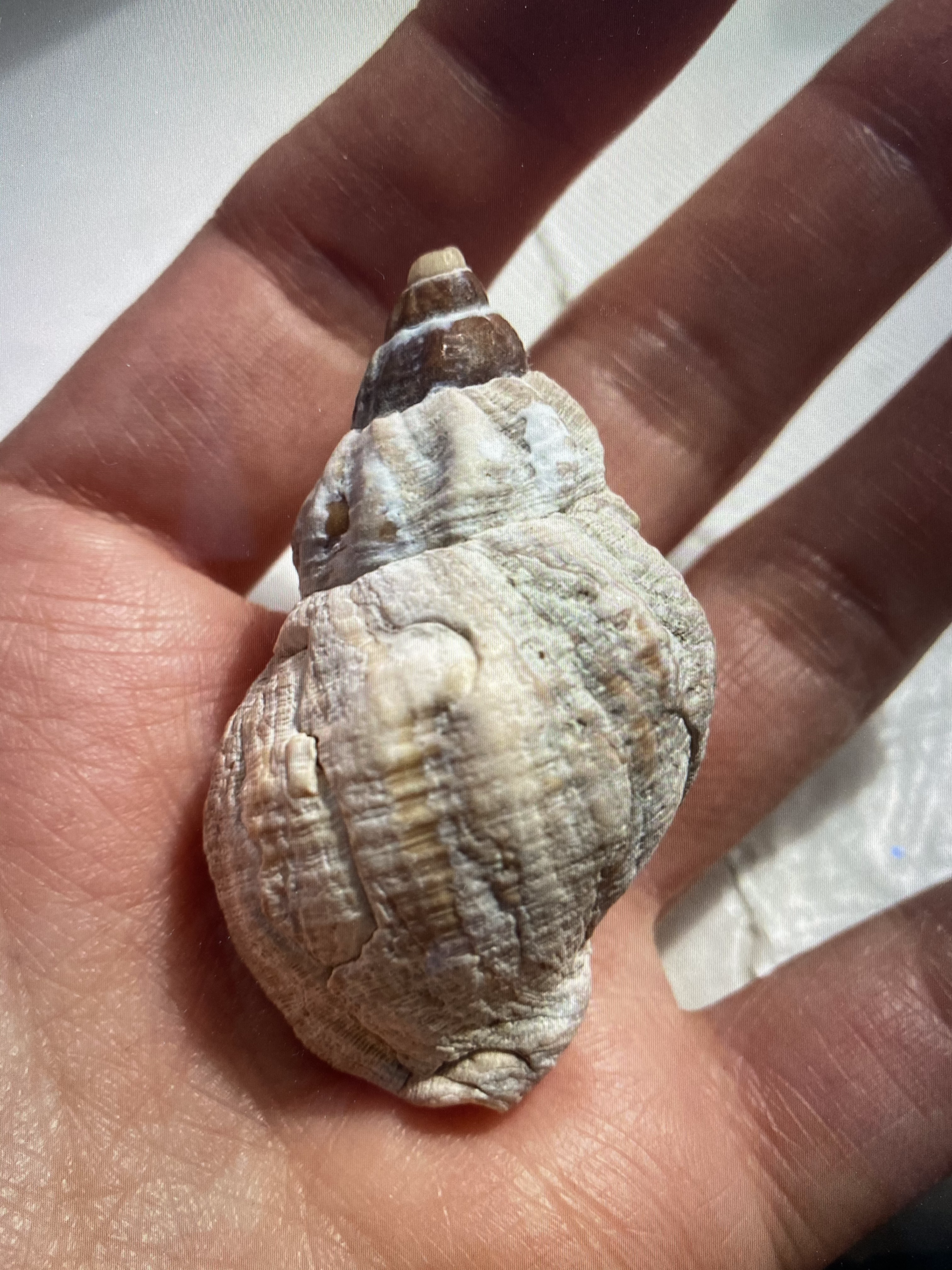
    It is a seashell, small and sandy in my pocket 
    I carry it with me wherever I go
    Coarse and smooth lines 
    Harmonious contradictions 
    Keep me at ease  
    
    It sings songs of the sea 
    Echoing choruses that tell me I am worthy
    Landing like waves on vast open expanses 
    Where there is room to breathe 
    Salt soothing rattled bones 
    Becoming strong, again  
    
    I press its cool protective casing 
    Against my lips
    Feeling the moment
    My place in the world 
    Mind connected to body
    A little life acknowledged 
    
    I am limitless


    Jenny Cusack is a writer based in Newcastle upon Tyne. 
    www.jennycusack.co.uk
  • Kindness and sending cards under lockdown

    Kindness and sending cards under lockdown

    By Eleanor Segall Mandelstam

    The theme of Mental Health Awareness Week this year is Kindness, to oneself and to others. When we struggle with mental illness, it can be hard to be kind to ourselves and our self esteem can plummet. It is particularly hard too due to the global Coronavirus pandemic and having restrictions on daily life.

    I know this all too well as I have lived with bipolar 1 disorder since the age of 16, I am now 31. I also struggle with panic attacks and anxiety, with suspected PTSD symptoms for which I am in therapy for. I have lived with social anxiety and panic for a long time and it worsened after I became manic and hit crisis point in 2014. 

    I was hospitalised for my bipolar and while in hospital, I was sent cards from friends and family which brightened my hospital room and made me feel less alone, with their kind words. In group therapy, we also made handmade cards to give to loved ones. The glow of happiness it gave me always stayed with me.

    Thankfully, in 2020, my bipolar has stabilised on medication and therapy, and I recovered in time. Yet, when Coronavirus hit the UK in March, no one was prepared for the mental health effects that lockdown could bring. Additionally, we already live with a mental health epidemic that seems to be worsening worldwide.

    As part of the growing mental health community on Twitter which is supportive, I put out a tweet in March asking if anyone would like a free handmade card by post to cheer people up under lockdown. The response was overwhelming. In 24 hours, I had about 20 card requests from people I had never met- from Scotland to Kent!

    Some were struggling with their mental health, others were carers for elderly family or children with autism, one person requested a card for a widowed relative and many requested for those hospitalised due to coronavirus . Another requested to cheer up her own children under lockdown.

    The cards seemed to unite people and I enjoyed making them with glitter card, coloured card, stickers and pens and going out for my daily walk to the postbox to post them. People were happy to receive the cards and tweeted me to say thank you. It was such an amazing feeling to spread some happiness. 

    I decided to call the project Corona Cards as it was started due to the virus! It has grown faster than I ever thought it would. We are now a team of 5- with Becky Johnson, Donna Davidson, Abigail Schischa and Emma Gordon on board. Becky came on board via Twitter and the others were people I already knew. Our card-makers are talented- Becky and Emma are experienced at making handmade cards, Donna is a calligrapher, Abi is an artist and they have turned their hands to making beautiful bespoke cards. They also have demanding day jobs and volunteer for free!

    We recently partnered with a nursing home in Manchester to send cards to them for elderly and lonely residents with help from a friend, Debby. We were also featured in Metro.co.uk, the Telegraph and on Heart Breakfast Radio show and nominated for an every day heroes award by New York newspaper The Forward!   

    We began to get global requests too- from as far away as Canada and Nigeria! We can send those cards by email to any country globally. 

    Card designs can be bespoke and vary from inspirational quotes, themed cards, animals and butterflies, rainbow and glitter hearts and more.

    I decided to set up a Twitter and Instagram for the project and we now send out about 10 cards a day, with regular requests.  You can request a handmade Corona Card for free via our social media but we also ask that if you can afford, to donate to a mental health charity to help their work.

    The project was set up to help alleviate loneliness and spread joy and in the theme of this week- kindness. I know what it is like to feel lonely and we hope that we can brighten up the lives of those struggling with their mental health in lockdown and beyond.


    Eleanor Segall is the author of ‘Bring me to Light: Embracing my Bipolar and Social Anxiety’, with Trigger Publishing.
    She is a mental health blogger at https://beurownlight.com/ , freelance journalist, advocate and founder of Corona Cards.

    Eleanor’s personal story of panic attacks, bipolar, depression and social anxiety. It’s about finding light in the dark, hope where there often is none. @TriggerPub
  • Kindness: The character strength we could all flex a little more

    Kindness: The character strength we could all flex a little more

    By Ruth Cooper-Dickson

    “What the world needs now is love, sweet love” sang Jackie DeShannon. The world we live in right now demands that we love each other more and demonstrate deeper kindness, a strength we all have the ability to flex.

    As a positive psychology practitioner, I have been using character strengths for several years as an intervention with my clients. Kindness is classified as a character strength in the ‘Values in Action’: a scientific positive psychology questionnaire, which is free to complete and download. The questionnaire is built on research taken from religions across the world and philosophical teachings across three millennia. Understanding our character traits brings an awareness to our own values and awareness of our core beliefs. 

    WHAT DOES IT MEAN TO DEMONSTRATE THE CHARACTER STRENGTH OF KINDNESS?
    To find out more and read Ruth’s complete article follow this link over to BALANCE MEDIA
    https://balance.media/kindness/?fbclid=IwAR1nwB2ODl16rYjq4tNq9LVw61R8O3mZtTT95eyA9P_x6haFUp0RcfhC9xI

    Ruth Cooper-Dickson
    Is one of No Panic’s fabulous patrons, a Mental Wealth Coach, Positive Psychology Practitioner and the founder and
    managing director of Champs Consult.  https://champsconsult.com/

    How can No Panic help?

    No Panic specialises in self-help recovery and our services aim to providing people with the skills they need to manage their condition and work towards recovery.

    Join one of No Panic’s Recovery Programs and learn anxiety management and cognitive behaviour therapy with a trained leader.

  • #TPWK

    #TPWK

    By Robbie-Lee Valentine

    Too little too late

    The UK’s Mental Health Minister Nadine Dorries has announced plans to provide leading charities a share of a 5-million-pound support package. The grants form part of a new NHS strategy put in place to help individuals struggling with their mental health.

    Their Royal Highnesses the Duke and Duchess of Cambridge said:

    “The last few weeks have been anxious and unsettling for everyone. We have to take time to support each other and find ways to look after our mental health”.

    Whether you’ve struggled with mental health issues before yourself or not, you’ll probably be aware of how much attention the mental health awareness movement is finally getting. Whilst the outbreak has presented new challenges to those already living with a diagnosis – we are now also seeing an unprecedented amount of much well needed government funding to assist more and more people accessing the services. The NHS has rolled out measures to ensure all of us who’re struggling are at least offered Facetime, Skype or digitally enabled therapy packages.

    #BeKind

    My thoughts go back to February of this year, particularly to the British born TV presenter Caroline Flack, her family and friends. Whilst we may all welcome the change to the mental health services provided by the government, unfortunately it was too late for Caroline, and others like her who needed the support then, months before we saw the worst of the pandemic. Before her tragic suicide she wrote a very poignant message on one of her social media accounts,

    “In a world where you can be anything, be kind” – and with that, Caroline’s legacy to the world, the kindness movement was born.
    Ever since, thousands of tweets have been written using the hashtag #BeKind. Did Caroline’s death form part of the catalyst in the shift of today’s attitudes surrounding the importance of, not only being kind but looking after our mental health with as much rigour as our physical health?

    What’s kindness?

    I don’t know about you, but whenever I begin to contemplate on the meaning of kindness, I immediately, perhaps quite rightly, think of myself doing kind deeds for others. Acting in ways that may hopefully improve the day of a loved one.. Or, even just intentionally offering a warm, loving smile to a stranger on the street. Quite simple and kind acts that have the potential to save lives.

    Kindness is a seed that grows within us and flourishes with radiating love and gratitude in the soul of the receiver. But what about you? Now might be a good time to put on the kettle, make yourselves a hot drink, or the beverage of your choice and allow yourself a few minutes to look inwardly. Scan your entire body and your thoughts whilst asking yourself how you’re truly feeling. Use this time to allow your mind to accept that, although what we’re currently experiencing is difficult and unpredictable, it’s perhaps for some, quite easy to dwell on the past and worry about the future. Especially for those with an anxiety related condition like OCD. When your mind starts to wander, remember this moment of calm and serenity and bring the focus back to deep mindful breathing. You have the control to come back to this space anytime you need to.

    Life Under Lockdown

    Whether you’re home schooling, working as a supermarket delivery driver, or even as a nurse on the front line. One thing that’s certain is that we all have more time on our hands. What we chose to do with this time is important. More time to be reflective. Time to reflect on the amount of people that have succumb to the pandemic. Reflective and appreciative of the hard work our key workers have done to help stop the spread of the virus. Grateful for all the lives that have been saved by our mighty NHS Doctors, Nurses, Cleaners and all involved, no matter their role.

    If you’re anything like me, the anxiety induced by the current situation very rarely seems to subside, even becoming obsessive at times. How can we manage this better?
    My anxieties are fuelled further by the general lack of structure and uncertainty. Exaggerated by mixed messages from government, the voice of my OCD and anxiety grow louder too with every passing day.

    Make a list of what troubles you most in order of anxiety level. For example:

    • Spread of germs
    • The children aren’t getting enough exercise
    • I’ve lapsed and washing hands more than necessary
    • Acting on old urges because of intrusive thoughts

    Living with ADHD & Autism during lockdown

    I made a very conscious decision recently.

    It’s one that I hoped would set the tone of my entire day. It came about around the time I was unable to get my medication for almost four weeks because of the chaos of late. Withdrawing and feeling the worst I’ve felt for months mentally. Disappointed in myself as I had only very recently recovered from Pure O, a little-known form of OCD. I thought I was doing very well until lockdown. Despite being taught new ways of learning to manage the ritualistic and frenzied behaviour of my Autism and ADHD – I felt myself being drawn back to previous distressing thought patterns and obsessions.

    These days again, as soon as my eyes would sluggishly open and I’d barely had time to focus and get my bearings – I’d reach for the remote control that’s normally hidden somewhere amongst my bedding. Reaching my hand out and searching through the sheets, passing over the bowl with the spoon that’s now stuck to it as the oat milk I ate cereal with at 1am has dried.

    Feeling my way through the warm slightly damp sheets (night terrors have become a thing again), past my charger, car keys, wallet, weighted vest and all the pointless pillows cocooning me, still no sign of the clicky-thing.
    Fumbling this time with my other hand through the crumbs and wrappers of whatever processed crap I shovelled into my mouth on one of my ‘don’t get out of bed for a week’ phases.

    Even though I was aware of crumbs falling onto my stained t-shirt and into the folds and cervices of my bed sheets, I still haven’t had the time to be bothered to change the sheets, as what’s the point? No one’s going to see it after all. Thankfully I’m single.
    Finally, after locating the remote, auto-pilot kicks in and I switch the TV on that’s bolted to my bedroom wall.

    Then, either I would flick through the channels from breakfast television doom and gloom to daytime TV Armageddon and back. Absolutely sick of the C word on the news, it’s almost as bad as the B word. Or, more often than not, I`d go and make my breakfast, maybe relieve myself, be overwhelmed with the light coming into the bathroom, look at the terrible state of my flat, feel a moment of hopelessness and dread with the uncomfortable heat on my skin radiating from under the bathroom blind – it would all be too much and I’d quickly find myself back in bed under my heavy blanket with Dr Hilary.

    This is how it all started before. Days and days of lying in bed paralysed with anxiety, racing and obsessive thoughts. Stimming away my energy by finger fluttering, counting in my head and vibrating my feet and toes at the speed of light. Patterns repeating themselves over and over, again and again – absolutely exhausting still I can’t sleep, all I can do is just lie there in my bed, one leg out of the duvet, on my back staring into space.

    I’d be constantly telling myself what it is I needed to do. But it’s lockdown, what do I really need to do? The voice that tells me to “Go and make a cup of tea”, only conjured up dread of potentially having to go in the kitchen where the harsh white light and buzzing of the kitchen light was. “Get a shower” – but I can’t bare the sensation of the water stabbing my body. “Slice some vegetables and make a decent meal” – What if I had thoughts of stabbing myself in the stomach, or I’ll start doing something else and forgot I even turned on the oven until it’s too late. I’ll just fester in bed.

    I start to replace intrusive thoughts with new mantras I learnt recently on a silent Buddhist retreat.
    Om tare tu tare ture swaha
    Om tare tu tar…

    “You can do this”, I suddenly say to myself amidst chanting.
    Before I get repetitive thought injury again, I remember I need to hear the reassuring voice of my therapist and her telling me that the worst thing I can do is to actively try to ignore my mind. I apparently possess the skills possible to turn this around. Believe it or not, we all do. It’s not as hard as it seems.

    The mindfulness of Kindness

    Think of ways you can help reduce your anxiety of the points you jotted down earlier.

    I thought to myself, “if I got rid of the TV in my bedroom and, instead of waking up and seeking another hit of glaring light from a glass screen, I might be able to steer my thoughts to a better place. You know, open the blinds, take a leak, splash some cold water over my face”, that sort of thing.

    That’s when change started to happen.

    Catching a quick glimpse of my sleepy face and squinting grimace in the bathroom mirror, I gave myself a look of disdain, like I was disappointed that I was here and that another day in lockdown had begun.

    But that’s not the truth.

    I remembered back to being intentionally kind to the strangers on the street, my fellow running buddies (they don’t know it, but they are).
    I remembered again Caroline’s words.

    “In a world where you can be anyone, be kind”.

    I started to chant these words over and over in my head adding be kind to yourself.

    “In a world where you can be anyone, be kind to yourself”. “In a world where you can be anyone, be kind to yourself”.

    I realised the reason I occasionally smile at strangers is to motivate them to keep going, keep running through the burn, through the worst of life under lock down.
    Just as I noticed I was urinating all over the bathroom floor, I debated with myself trying to determine why I’m never kind to myself, why I always criticise and mock myself? Why do I automatically take myself out of the picture by assuming that being kind is all about being kind to others?

    Of course, doing good deeds for others on the one hand is our duty, I believe.

    What about us? What about me?

    That’s it, I thought, as I finally psyched myself up to splash icy cold water on my face, wash my hands and clear up the mess on the floor.
    Then suddenly again, I lost all courage and momentum. I cringed as I thought about the odd thing I was about to do.

    But I did it.

    I stared deeply at my reflection. A dishevelled version of the person I know’s inside. I looked at myself in the mirror again, this time with real intent. I saw the usual crop that is my messy and greasy mop, my face frames with unkempt facial hair. Then examining my expression, I scoured at the blemishes on my face, pulled my lips down and tutted at the image of my stained teeth and crooked nose – then drew my focus to my eyes. My yellowy, green tired looking eyes.

    I forced myself to smile and, without thinking about it, I stared deeper, making actual eye contact with myself. Out of nowhere I heard myself saying out loud, “I love you; I actually really love you”.

    Immediately I felt this bizarre wave of kindness and love ride through my body reminiscent of the feeling I often have when practising Metta Bhavana. “There’s something in this, it feels like magic”, I thought.
    And from that day forward, the first thing I do now after I’ve peeled open my crusty eyes, no matter my initial thoughts, or mood, I simply smile and tell myself that today is going to be a good day and that I love myself.

    You should try it.

    Covid-19 Changed Me

    The week-old dirty pots and pans, sticky spoons and bowls and my bushy beard all get a facelift.. My hermit haven is now filled with the smell of bleach and polish, and the noise from the washing machine vibrates through the floor.. No longer am I neglecting myself. I changed my smelly, stained bed sheets and, despite having nowhere to go except the supermarket or the coast road for a jog,

    I change out of my bed clothes and put on clean, fresh clothes – and I smile again.

    Our whole lives can be split into a number of very small moments like these. Now more than ever, it’s absolutely paramount that we pay extra care to those around us who’re already suffering with any mental health related condition. Just one moment of negative thinking, or intentionally doing a negative act to ourselves or to someone else, is one too many.

    In whatever way makes sense to you, remember the value of the #BeKind movement. Take kindness with you wherever you go and use it as a powerful source of light for those still left in the shadows. If we adore ourselves, we turbo charge our ability to treat others, including strangers with beautiful purposeful, mindful acts of kindness.

    Imagine that daily smile as the seed that flourishes within you, nurturing your soul and radiating out of your loving soul for the whole world to bask in.

    Finally, remember it starts with you. Happy Mental Health Awareness week.

    Rest in peace, Caroline, thank you.

    Robbie-Lee Valentine x

    Swami Purnachaitanya, senior programme director, Art of Living, is Robbie’s inspiration for continuing along the path of spirituality. https://www.swamipurnachaitanya.com/

    “Never underestimate the power of kindness, it is the power you have to uplift people, instantly. Just like a harsh comment, blame or criticism hurts us and makes us feel uncomfortable, even if we know it is not true or justified, a kind comment or praise we receive from someone always uplifts us, even if we know it is not true. This is why they say praising, from the heart, is a divine quality”.Swami Purnachaitanya The Art of Living
    Robbie-Lee Valentine is a TV presenter, writer and mental health advocate. https://www.youtube.com/channel/UC7LG4w8H7x53Gtbylb4JYCQ
  • Kindness to oneself

    Kindness to oneself

    By Natasha Devon MBE

    I think most people would agree on the importance of being kind to others. We’ve all seen small acts of generosity and thoughtfulness which have huge impacts on their recipients. Plus, studies show when we do good deeds it doesn’t just benefit the person for whom the deed is done – the deed doer also receives a dose of feel-good endorphins, which help restore brain chemistry and induce a so-called ‘helper’s high’. 

    But what about the kindness we show towards ourselves? In 2018 I read a book which changed my perspective on many things. The Kindness Method by Shahroo Izadi argues that if we want to examine our lives and change our habits, the first step is to do so with the same compassion and patience we would if we were helping our best friend. 

    When we tune into our inner voice, it’s surprising how often we’re telling ourselves, in a whole host of different ways and situations, that we are lazy, incapable or stupid. These thoughts are often the result of residual beliefs which emerged during childhood experiences – a family friend who used to say we needed to lose weight, an incident when a parent lost their temper and said something cruel they didn’t mean, or a teacher who would tell us we weren’t any good at a particular subject. The chances are, if we could track those people down and ask them, they wouldn’t even remember making the comment. They were probably having a bad day, or projecting their own issues. Their assessments certainly have no bearing on the person we have become today. 

    Furthermore, we know that for the vast majority of people being highly critical doesn’t work as a motivator. If we were trying to encourage a friend to achieve a goal, we wouldn’t scream at them that they should never have let themselves get this way in the first place, or that they’ve destined to fail because they’re so useless. So why do we do this to ourselves? 

    Shahroo, who has a background working in addiction, also talks about how so many of us put our lives on hold until we have reached the (often arbitrary) targets we have set ourselves. Until we have lost that weight, or got that promotion, we don’t think we are worthy of showing ourselves kindness. So we say no to social occasions, or deny ourselves a holiday, believing the experience will only be fun and rewarding if we can do it as our ‘best selves’.

    Yet as the COVID19 crisis has taught us, life is often unpredictable and fate tends not to care about our plans. Lockdown actually represents a really good time to assess how well our lifestyle and habits are serving our wellbeing and happiness. For most of us, we have spent some time off the ‘treadmill’, not being carried along unawares by the momentum of the things we usually do every day. Spending more time at home with our families, or conversely not being able to see them, has made lots of us realise how precious time is and reassess our priorities. 

    If you have the energy, now is therefore an excellent time for a life audit. But, if you take up this challenge, make sure you treat yourself with the same kindness you would show someone you love. 

    You can buy The Kindness Method here: https://www.amazon.co.uk/Kindness-Method-Changing-Habits-Good/dp/1509881824/ 

    As well as being one of No Panic’s valued patrons, Natasha Devon MBE is a writer and campaigner. She travels schools and colleges throughout the UK and the world delivering classes and conducting research with teenagers, teachers and parents on mental health, body image and social equality.  Her latest book ‘Yes You Can: Ace Your Exams Without Losing Your Mind’ can be bought here  You can also listen to her brand new podcast ‘Staying Sane in Quarantine’ here  And the fabulous ‘A Beginner’s Guide to Being Mental, an A-Z’ can be bought  here.

    How can No Panic help you?
    No Panic specialises in self-help recovery and our services include:
    Providing people with the skills they need to manage their condition and work towards recovery.
    Our aim is to give you all of the necessary advice, tools and support that you will need to recover and carry out this journey. Find out more: https://nopanic.org.uk/no-panics-5-step-approach/

  • Adopting kindness released years of pent-up anxiety

    Adopting kindness released years of pent-up anxiety

    By Lucy Nichol

    It’s another Mental Health Awareness Week and the theme, as you are probably aware by now, is kindness – something I see as playing a key role in my mental wellbeing.

    Having been diagnosed with an anxiety disorder, I remember being shocked when my GP linked my angry outbursts to my anxiety. I thought I was just a bit of a cow, to be honest. Indeed, that may be the case sometimes – nobody’s perfect after all. But I think he was onto something, because I found that my anger was often driven by worry, stress and insecurity.

    There’s a lot to consider when you identify something in your own behaviour that you want to change. There’s no flick of a switch. There’s a lot of work to be done on your thinking patterns, triggers and, if you have a diagnosed mental health problem, how to manage that as well.

    For me, years of therapy and medication have played a major role. I say this personally, as medication isn’t right for everyone. But for me, antidepressants have played a significant role in my life over the past 5 or 6 years.

    They didn’t completely stop my panic attacks, but they helped give me the breathing space to think before I acted. I stopped getting the immense rush of adrenaline in my body that often prompted me to explode over stupid stuff – like someone drinking the last can of pop or leaving a dirty cup in the sink.

    My relationships began to improve, and I found that removing my ridiculous outbursts from family life helped me to feel so much happier – not to mention everyone else.

    But one thing that I began to realise throughout all this was that I was harbouring age-old anger about things just because I had always been angry about these things.

    Some external relationships were really strained. I’d gotten into the habit of just being angry towards certain people because of past circumstances or actions. And that anger made me feel sick. Sick with stress and anxiety and a need to feel on high alert constantly.

    As I began to question the reasons for my anger, I realised that I was hurting myself as much as anyone else. Was there really any need for it?

    There was always one relationship that I particularly struggled with for many years. And the impact of that hit others too. But as I gradually began to change my previously static thinking and move towards kindness, I found such intense relief. The relationship changed. We sent each other cards at Christmas and it felt good. We might never be best friends – indeed you don’t have to be best friends with everyone – but letting go of that anger was a game-changer.

    And not only that, I found myself spending time with the person when they needed help. She was actually very vulnerable, and I realised that things aren’t black and white. Who cares what they said or what I said or whatever stupid things we did to hurt each other in the past? Holding onto the past hurts more than the incidents themselves do at the time. It’s exhausting. And pointless.

    I’m far from perfect, and I will no doubt need to remind myself to read this post in future if I experience conflict and hold onto negative emotions. But adopting kindness, at the end of the day, is not just a generous thing, it’s a self-care thing too.


    Lucy Nichol is a writer and mental health campaigner and former columnist with Sarah Millican’s Standard Issuemagazine. Her work has appeared in The Independent, The I Paper, The Metro, The Huffington Post, The Mighty and All Mad Here. Her latest book, ‘ A Series of Unfortunate Stereotypes: Naming and Shaming Mental Health’ is a humorous, sometimes ranty, take on mental health stigma and her experience of anxiety. It takes you through the 80s and 90s to the present day, talking about how the mental health conversation has changed for the better, and how she found peace with an anxiety disorder. Find out more here: https://www.amazon.co.uk/Unfortunate-Stereotypes-Naming-Shaming-Stigmas/dp/1911246658/ref=sr_1_1?ie=UTF8&qid=1533200846&sr=8-1&keywords=lucy+nichol+series+of+unfortunate+stereotypes