When you focus on all the good things in your life you naturally become a more positive person. Writing down just five things each day that you are thankful for, will make you more optimistic and therefore automatically happier. It is no good just thinking about them, you have to take action and put pen to paper to make them concrete.
Some days you may be challenged with difficult situations or certain obstacles might get in the way, but each day will have some good in it somewhere. It doesn’t have to be anything huge like a life-changing event, in fact, learning to appreciate the small things has many advantages.
Let’s get going:
Plan aside 5 minutes of your day, just before you go to bed is ideal. Keep it consistent, this way it will more easily become a habit.
Write down exactly 5 positive things from your day, no less, no more.
It doesn’t have to be anything big, just positive. For example, “It was a sunny day”, “I spoke to a friend”, “I wore bright colours”, “My coffee tasted good”……….
Research has shown that it takes just one month for actions to become habits. What are you waiting for? Let’s get positive.
Engaging in physical exercise diverts your attention from the very thing you are feeling anxious about. Moving your body decreases muscle tension, reduces stress levels, helps relieve frustration and gives you a sense of achievement. People who exercise regularly say it gives them an enormous sense of well-being and achievement. By taking part in just 15 minutes of physical activity each day you will feel more positive and motivated.
When we exercise our body releases endorphins which are hormones that make us naturally feel good. Exercise also increases our body temperature which can have a calming effect. You are not expected to do a marathon or a gym class, but a little something every day. Maybe a walk or a cycle. These are perfect examples as they get you out of the house at the same time.
If going out is a problem for you then exercising at home is a great alternative. Running up and down the stairs or put on some music and dance away your worries. Start slowly and build up gradually day by day.
Don’t be put off, exercise doesn’t have to be a hard session at the gym, it might be a swim, some yoga or even a bit of gardening. It always helps if you can enjoy what keeps you fit and healthy.
Do you ever wake up in the morning and dread the day ahead? There is so much to do and you wonder how you will ever get through half of the things that need to be done!
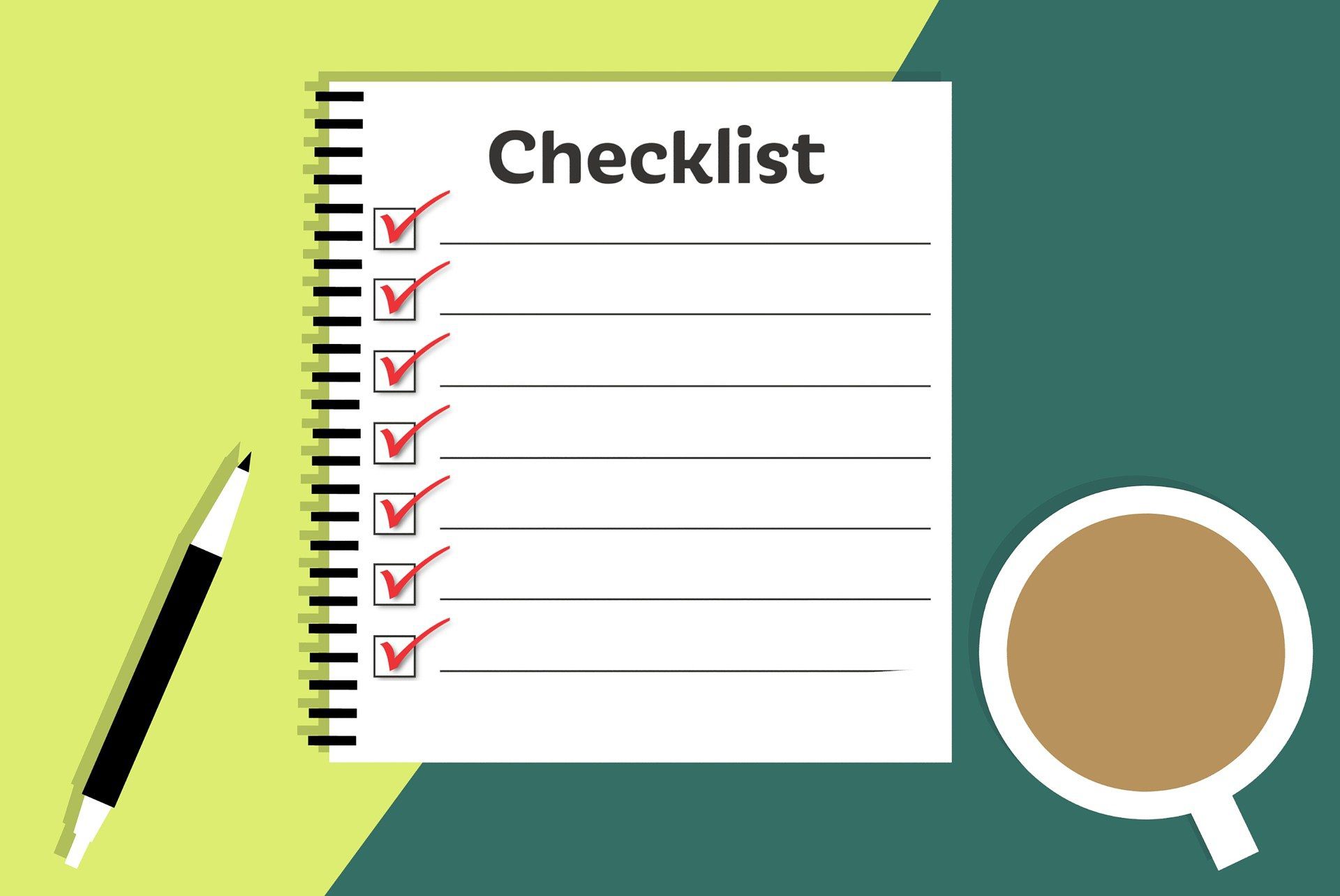
Well the answer is to make a list. Write everything down in black and white and then write numbers next to each item in order of priority.
You can then, step by step, work through the list, ticking off jobs achieved as you go. Breaking things down in to small tasks is less daunting than facing the whole issue.
For example; maybe the house needs tidying and you have piles of paperwork. The best thing to do is decide which out of the two is a priority then break that job down. If the paperwork is top of the list, organise it into 3 piles, 1 = Top priority 2 = Important 3 = Can wait. Attend to pile 1 first then pile 2 followed by pile 3. Don’t forget to tick off the things on your list as you go.
The same applies for jobs around the house. Top priority might be preparing a meal for example. By taking just small steps and concentrating on one at a time you will progress through the tasks, slowly but surely.
It is very satisfying to see a huge red tick next to an accomplished task. It is extremely rewarding to work your way through a ‘to-do’ list and also a great boost to your general wellbeing.
Celebrating, accepting, and loving yourself is so important although sometimes we can find it hard to give ourselves a pat on the back. We are living in such a fast-paced world always looking to do better, be better and strive for more. It’s ok to have big goals but it is also important to celebrate the little things.
After a period of poor mental health, I set up Little Victories to support and encourage others to celebrate all their little victories. I found when I was struggling with high levels of anxiety all I could focus on was what I was not doing or achieving. I was constantly putting myself down and feeling like a failure. At times things seemed such a blur and hectic I knew I needed to slow things down and appreciate the little things in life more. I decided I needed to check in with myself daily sometimes hourly and reflect on what I had accomplished.
After just a short time of doing this I noticed a change in my mindset. By identifying all the little victories I had achieved it helped build my self-esteem and in turn reduced my anxiety.
So How can you celebrate your little victories?
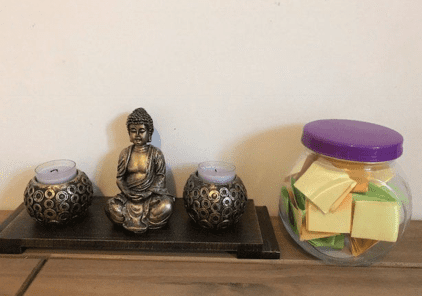
Little Victories Jar
Little Victories Jar 1) Purchase a small Jar, pack of sticky notes and of course, you will need a pen 2) Each Day write down on a sticky note the date and something small you achieved that day. For example, ” 01/5/18 Today I took my children to the park and managed my anxiety”, “05/6/18 Today I met with a friend for a coffee”. 3) As the days go by the jar will slowly fill up 4) At the end of the year open the jar and read out loud all the wonderful things you managed to achieve no matter how small and reflect on how far you have come.
A Victory Journal
A Victory Journal A Journal is a written record of your thoughts, experiences, and observations and a great way to document your victories. Keeping a victory journal can do wonders for your self-esteem. Not only does regular journaling make you feel good, but it also helps you re-live the events you experienced in a safe environment where you can process them without fear or stress. So, pick yourself up a notepad or invest in a journal and each day write down your thoughts and feelings from the day and write down your little victories. It is important to not give yourself a hard time and think your victories are not deserving of celebrating. Go back to basics and celebrate taking a shower, implementing self-care, or preparing a meal. It can be that simple!
Reward Yourself! Treat yourself to something nice you deserve to reward yourself. This can range from things like:
Buy Yourself a Gift
Book a Spa Treatment
Book a Meal or Takeaway
Its easy to self-sabotage and let the negative thoughts over power your victories so, it is important to schedule some time maybe as a reminder on your phone or calendar to pop a note in your victories jar or write in your journal.
Remember Every Little Victory Matters No Matter How Small!
How can No Panic help? No Panic specialises in self-help recovery and our services include: Providing people with the skills they need to manage their condition and work towards recovery. Our aim is to give you all of the necessary advice, tools and support that you will need to recover and carry out this journey. No Panic Recovery Programs
I’d like to introduce myself and my book to the No-Panic community. My pen-name is Sophie Rose Peters which I have devised to keep my privacy as well as the full freedom to write from the heart and to share what I know from deep personal experience. The photos I include aim to show that one of my favourite ways of tuning out anxiety and focusing on beauty is through photography.
Empaths are people who can easily feel what others feel. This can create stress and inner turmoil. Creative work, like art, writing or photography can be fun and great anxiety relievers.
As I write at the back of the book many empaths struggle with anxiety. This is nothing to be ashamed of. Being people who are naturally sensitive to the energy of other people and their environment, empaths can quickly take on strong vibes that set off their nervous system.
This is where my book comes in handy. I know anxiety well personally. I’ve struggled with it since I was sixteen years old, when I had my first panic attack in a summer school where I had to read my philosophy essay out loud to the rest of the class. It was my first episode and it was scary, it shook me deeply and in many ways would come to define the rest of my life as I sought to understand it and ‘get rid of it.’
I am some decades on and I still experience anxiety in certain situations. If I had to face the same conditions, that is being in the spotlight and having to read or speak, I’d be feeling it full force. All this, despite therapy and much more awareness of myself and my personal history.
So what is it about anxiety that can have such a grip on many of us as empaths? Maybe that answer is unique and personal to each one of us. I know that I really don’t like to be the centre of attention. My days of loving the spotlight and seeking out the popularity of my teenage years is long gone. In some ways I miss the more ‘extroverted’ side of myself that played its part in my early years but now that I know that I am an introvert I am okay with being more behind the scenes.
It helped me tremendously to learn that I am an empath and I’ve read many books on the topic. Getting to know one’s self is super fun and also seriously enlightening. Learning to help one’s self feel better is wise.
Many of us may have grown up feeling different and/or criticised for being too sensitive, too intense or too ‘whatever.’ Well, we are sensitive and many of us are intense. We feel things deeply, how can we not be these things?
What we really need is to understand ourselves, have compassion and empathy with who we are and all that we can become. Empaths are very special people. We are typically kind, loving and benevolent. While we have shared traits and characteristics we are unique as snow flakes with differing gifts and talents to offer to ourselves and others. We were born to enjoy life and to appreciate who we are.
But this doesn’t always come easily for us. Many of us need to heal ourselves to feel like our authentic selves. Healing our anxiety may not ‘cure’ it but we can become more secure as we seek ways to soften our experience of it.
Without being prescriptive, this book aims to offer hope and practical guidance. Personal and friendly, it is written with a helpful approach. The chapters in the book explore creativity, nature, exercise, sleep, work, relationships, mental health, success, faith and spirituality, as related to empaths. All take into consideration how they can be used to ease anxiety.
I share something of myself in the book but it is written to help you, the reader to better understand yourself and your individual nature and circumstances. It is an empowering book that holds empaths in high esteem and acknowledges our strength, resilience and resourcefulness. We deserve to love and be loved, it is true love that ultimately heals our anxiety and sets us free on the path to a joyful, balanced and good life.
By discovering what lights you up, anxiety can ease greatly. I hope that you will take this journey with me as you enjoy the book! And if you decide to try photography, I hope it brings you the same joy that it does for me.
How can No Panic help? No Panic specialises in self-help recovery and our services include: Providing people with the skills they need to manage their condition and work towards recovery. Our aim is to give you all of the necessary advice, tools and support that you will need to recover and carry out this journey. No Panic Recovery Programs
Neuroplasticity is the ability of the brain to change and grow continuously throughout a person’s life. This fairly recent discovery contradicts the popular belief that the brain wears down over time, becoming fixed in its ways as we grow older. Like any physical muscle, the brain gets stronger the more you use it. Which is all the proof we need to show retraining the brain is one hundred percent possible.
The brain is a pattern-seeking device. When you learn things, your brain sends messages from one neuron to another. By doing the same thing over and over again the brain eventually makes a pathway between the neurons, which then makes whatever it is you are doing easier and easier. For example; Imagine that you are mowing tall grass between two hedges. The first pathway through the grass will be difficult and you will need to push the lawnmower very hard. The second attempt will be slightly easier but the more often you follow the same pathway, the simpler it will get. This is just like neuroplasticity, the more often you do something with your mind the easier it gets as the brain will remember the pattern it has used before.
Another example of neuroplasticity at work is: When we first learnt to read at school it was done gradually. By repeating firstly letters, then words they became more and more familiar. No magic wand involved, just going over the same thing time and time again was all that was needed.
So now we know that however difficult something may seem, anything is possible with practice. You are in charge of your brain and you can learn anything you like and also change your way of thinking. So now let’s look at what you can do on a daily basis to retrain your brain and reduce anxiety, panic as well as changing your way of thinking from negative to positive:
Be grateful whenever you can.
Practice mindfulness/meditation.
Write a positivity diary.
Be kind to everyone, including yourself.
Focus on all you have instead of what you would like.
Set goals and persevere.
Learn something new.
Remember you can do this.
How can No Panic help? No Panic specialises in self-help recovery and our services include: Providing people with the skills they need to manage their condition and work towards recovery. Our aim is to give you all of the necessary advice, tools and support that you will need to recover and carry out this journey. No Panic Recovery Programs
In fact, any event that does not fit into the order of our ordinary life (and in our expectations) even minimally is already a sufficient source for stress. And even when this is a planned and expected event, the level of stress will still not decrease. But rather, it will increase, because, in a certain way, the outcome of this event will be in the zone of your responsibility. Regardless of whether you are a participant or an organiser of the event, it is normal to experience excitement on the verge of stress. This article will help you deal with this.
Create Check-Lists with Deadlines and Stick to Them
Preparing for the event, you need to create checklists and set a deadline for each task. Of course, the organizers and participants will have different tasks, but the checklist approach works well for everyone. Use a traditional notebook and pen, or any of today’s apps like Todoist.
Moreover, be sure to set deadlines for each task and mark what has already been completed. Even a single glance at the list of completed tasks will give you a sense of confidence that everything is going according to plan. As we have said, stress is triggered by extraordinary events, and clear planning gives a clear vision of the situation and calmness.
Take Care of Your Health with Additional Vitamins
When our body is under stress, for example, caused by the expectation of an event, it uses all our physical resources to survive. Do you know why it is possible to lose weight from stress? It is for this reason – the body is fighting for life, using the available resources.
Therefore, your task is to maintain your body in a healthy state. There is even the study of the University of Swansea, Wales, which showed that people who took a multivitamin pill for the duration of a month experienced a 68 percent reduction in anxiety.
Vitamins and minerals can reduce the effects of stress on the physical as well as the mental level. They regulate the biochemical processes in the brain that influence mood. And our self-esteem and self-confidence also directly depends on our mood. In order to cope with the stress before the event, you need a state of the best mood, the highest self-esteem, and the strongest confidence. Vitamins help support this condition, of course, if you make other efforts as well. The next paragraph is about them.
Fight Your Fear of Public Speaking with the Following Three Tips
If you are the organizer of the event, then your headache is of a completely different nature. However, if you are a participant, then public speaking is inevitable. As a rule, this is the biggest fear – and therefore, the biggest source of stress before the event. Here are three methods that will help you to cope with it.
The secret of the first method is to distribute your attention.
A person at one moment in time is able to concentrate his attention on only one object. Accordingly, concentrating on the fight against fear, we automatically lose focus on what we are doing, that is, on our goal. To make this method work, first, formulate for yourself a clear and achievable goal for specific performance. And during the speech, concentrate on achieving it.
The second method allows you to minimize the factor of lack of experience.
The essence of this method is preparation and training. Lack of training and experience leaves a lot of space for unforeseen situations, and therefore for concern about them.
For example, if you’re not sure about whether or not your content is impressive and compelling enough, you can find experienced professional writers on best essay writing sites reviews websites. Next, you may ask a tutor to help you with pronunciation, intonation and the pace of your speech.
The third method contains the formula “Do what you have to and be what happens!”.
Refuse the expectations of vivid positive reactions, the crowds who want to talk or order your product, the instant execution of all your instructions and requirements by subordinates. Free yourself from expectations, make your statement and observe what happens. Most likely, you will be pleasantly surprised.
Enhance Your Self Confidence with a Great Outlook
Stress goes away when we are most confident in our success. And appearance is one way to artificially increase your level of self-confidence. No, of course, this does not mean that you can take planning lightly. Your best look will simply be an added bonus to your sense of confidence.
Therefore, a few days before the planned event, review your clothes and find the best combination that matches the atmosphere of the event. Moreover, your sense of comfort is very important. Choose clothes that will not hamper movement and breathing. It should be something beautiful, moderate and comfortable at the same time.
Girls should also think about hairstyle, accessories, and makeup, which should not be too bright if it is not a carnival. And it’s always a good idea not to wear too high heels.
Breathe, Meditate, Visualize
So, when everything is ready and planned, the last thing you need to do is to stabilize your nervous system. A few days before the event, take a few minutes a day to calm down, breathe smoothly and calmly, meditate and visualize.
Try to mentally review the course of the event and imagine it as you want it to be. Look at yourself on the stage, mentally hear how you are speaking, imagine the attention of the audience. Let your thoughts merge with reality and fill you with a sense of peace and success. Imagine that the event has already happened and everything was as you planned – let the feeling of joy and pride fill you from the inside. Remember these feelings inside you and return to them if you feel that you are starting to worry.
Conclusion
You can rest assured that even world-famous personalities experience stress before important performances, meetings, and concerts. Any important event will always be stressful – and it is also worth accepting this fact. However, you can reduce the impact of stress on you by carefully preparing and planning, supporting friends and family, and attentive care of your health.
This article was written by Ana Mayer, a project manager with 3+ years of experience. While projects can do without her participation (which means almost never), she likes to read and create expert academic materials for the online essay writing service review websites.
How can No Panic help? No Panic specialises in self-help recovery and our services include: Providing people with the skills they need to manage their condition and work towards recovery. Our aim is to give you all of the necessary advice, tools and support that you will need to recover and carry out this journey. Find out about how our recovery programs work in No Panic’s 5 Step Approach https://nopanic.org.uk/no-panics-5-step-approach/
If it is an anxiety disorder on its own, the only reason for hospitalisation is for intensive treatment that can’t be carried out as an out-patient. This is only necessary in the severest cases of OCD and related disorders. Such cases are very rare and treatments are conducted in highly specialised units, of which there is only a handful across the country.
People with anxiety disorders commonly fear going mad – such fears are irrational; even the severest panic attacks can be treated effectively in the community.
In-patient care is reserved for the severest cases of psychotic disorders such as schizophrenia and severe depression. In addition, admission is reserved for those at the highest levels of risk, for example, those who not only have suicidal ideas (not fears of losing control and committing suicide) and in addition evidence of intent to commit suicide and plans to do so.
Just to complete the picture, anxiety disorders cannot be a reason for sectioning under the Mental Health Act.
Professor Kevin Gournayis an Emeritus Professor at the Institute of Psychiatry. He has more than 35 years of experience and is the author of more than 130 articles and books. He is based in Cheshunt Hertfordshire.
How can No Panic help? No Panic specialises in self-help recovery and our services include: Providing people with the skills they need to manage their condition and work towards recovery. Our aim is to give you all of the necessary advice, tools and support that you will need to recover and carry out this journey. No Panic Recovery Programs
Become a member of No Panic and join one of our Recovery Groups or One to One Mentoring services with a trained leader and work on Anxiety Management and Cognitive Behaviour Therapy to overcome your phobia.
FACT: Everyone has problems in life. A lot of the time these can be resolved quite quickly without too much anxiety. But sometimes it may not be that easy and you end up focussing so much on the problem that it can leave you feeling in a low mood with a general feeling of negativity. Problems become even more difficult when there doesn’t seem to be an obvious solution and things that you have tried before don’t work. It is very important to solve as many problems as you can in life to boost your self-esteem and leave you feeling less anxious or worried.
So what is the answer and how do we solve general life problems?
Acknowledge the problem, then write it down on paper.
Define the problem. What is the situation now? What would I like the situation to be?
Check your past. Has anything like this happened before? How did you cope? Is there anything you could use again?
Break the problem down into parts if possible. This will make it less daunting to find solutions.
Search for solutions. This may seem a tricky thing to do but there are solutions out there for every problem.
Remember that not solving a problem can lead to more anxiety than trying to solve it.
Taking just a small step forward is better than staying where you are.
Ask for help. Family, friends or even charities like No Panic might have ideas that you have not even thought of.
How can No Panic help? No Panic specialises in self-help recovery and our services include: Providing people with the skills they need to manage their condition and work towards recovery. Our aim is to give you all of the necessary advice, tools and support that you will need to recover and carry out this journey. No Panic Recovery Programs
Many people find that their anxiety is at its worst in the mornings. Racing thoughts, panic symptoms and excessive worry can strike as soon as you wake up, even before you have set foot on the floor. If you can relate to this, please be reassured, you are not alone. Morning anxiety is very common.
What causes morning anxiety?
Here are some possible answers:
Studies have shown that the level of the “stress hormone, cortisol is quite often at its highest during the first hour of waking up.
After a night’s sleep, the blood sugar levels in our bodies are low, this can trigger anxiety. The body needs refueling. Little and often is a good tip, this keeps our sugar levels balanced.
Too much caffeine and sugar can increase anxiety symptoms. So be aware of what you consume first thing.
If you go to bed with anxious thoughts or lie awake worrying during the night, you are quite likely to wake up feeling stressed.
What can you do to ease Morning anxiety?
Here are a few suggestions:
Eat a healthy, well-balanced diet. Cutting out or reducing sugar, caffeine and processed foods. https://nopanic.org.uk/diet/
Reducing anxious thoughts before bed. Keep a pad and pen next to the bed, write any worries down and promise yourself you will deal with them at a more appropriate time.
If you find your anxiety is affecting your everyday life and stopping you from living the way you should, maybe you need a bit more help or support?
How can No Panic help? No Panic specialises in self-help recovery and our services include: Providing people with the skills they need to manage their condition and work towards recovery. Our aim is to give you all of the necessary advice, tools and support that you will need to recover and carry out this journey. No Panic Recovery Programs