Category: Articles from Outside No Panic

  • Celebrate All Your Little Victories

    Celebrate All Your Little Victories

    By Rebecca Stephenson 

    How to Celebrate the Little Things

    Celebrating, accepting, and loving yourself is so important although sometimes we can find it hard to give ourselves a pat on the back. We are living in such a fast-paced world always looking to do better, be better and strive for more. It’s ok to have big goals but it is also important to celebrate the little things. 

    After a period of poor mental health, I set up Little Victories to support and encourage others to celebrate all their little victories. I found when I was struggling with high levels of anxiety all I could focus on was what I was not doing or achieving. I was constantly putting myself down and feeling like a failure. At times things seemed such a blur and hectic I knew I needed to slow things down and appreciate the little things in life more.
    I decided I needed to check in with myself daily sometimes hourly and reflect on what I had accomplished.

    After just a short time of doing this I noticed a change in my mindset. By identifying all the little victories I had achieved it helped build my self-esteem and in turn reduced my anxiety. 

    So How can you celebrate your little victories?

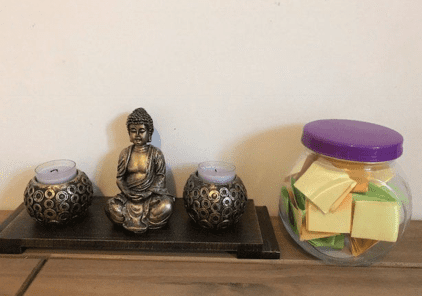
    Little Victories Jar

    Little Victories Jar
    1) Purchase a small Jar, pack of sticky notes and of course, you will need a pen
    2) Each Day write down on a sticky note the date and something small you achieved that day. For example, ” 01/5/18 Today I took my children to the park and managed my anxiety”, “05/6/18 Today I met with a friend for a coffee”.
    3) As the days go by the jar will slowly fill up
    4) At the end of the year open the jar and read out loud all the wonderful things you managed to achieve no matter how small and reflect on how far you have come.

    A Victory Journal


    A Victory Journal
    A Journal is a written record of your thoughts, experiences, and observations and a great way to document your victories. Keeping a victory journal can do wonders for your self-esteem. Not only does regular journaling make you feel good, but it also helps you re-live the events you experienced in a safe environment where you can process them without fear or stress. So, pick yourself up a notepad or invest in a journal and each day write down your thoughts and feelings from the day and write down your little victories. It is important to not give yourself a hard time and think your victories are not deserving of celebrating. Go back to basics and celebrate taking a shower, implementing self-care, or preparing a meal. It can be that simple!

    Reward Yourself!
    Treat yourself to something nice you deserve to reward yourself. This can range from things like:

    • Buy Yourself a Gift 
    • Book a Spa Treatment
    • Book a Meal or Takeaway


    Its easy to self-sabotage and let the negative thoughts over power your victories so, it is important to schedule some time maybe as a reminder on your phone or calendar to pop a note in your victories jar or write in your journal.

    Remember Every Little Victory Matters No Matter How Small! 

    Rebecca x

    www.instagram.com/littlevictoriesmatter

    How can No Panic help?
    No Panic specialises in self-help recovery and our services include:
    Providing people with the skills they need to manage their condition and work towards recovery.
    Our aim is to give you all of the necessary advice, tools and support that you will need to recover and carry out this journey. No Panic Recovery Programs

  • Healing Anxiety in Empaths

    Healing Anxiety in Empaths

       A book and tips by Sophie Rose Peters 

    I’d like to introduce myself and my book to the No-Panic community.  My pen-name is Sophie Rose Peters which I have devised to keep my privacy as well as the full freedom to write from the heart and to share what I know from deep personal experience.  The photos I include aim to show that one of my favourite ways of tuning out anxiety and focusing on beauty is through photography.  

    Empaths are people who can easily feel what others feel.  This can create stress and inner turmoil.  Creative work, like art, writing or photography can be fun and great anxiety relievers.

    As I write at the back of the book many empaths struggle with anxiety.  This is nothing to be ashamed of.  Being people who are naturally sensitive to the energy of other people and their environment, empaths can quickly take on strong vibes that set off their nervous system.

    This is where my book comes in handy.  I know anxiety well personally.  I’ve struggled with it since I was sixteen years old, when I had my first panic attack in a summer school where I had to read my philosophy essay out loud to the rest of the class.  It was my first episode and it was scary, it shook me deeply and in many ways would come to define the rest of my life as I sought to understand it and ‘get rid of it.’  

    I am some decades on and I still experience anxiety in certain situations.  If I had to face the same conditions, that is being in the spotlight and having to read or speak, I’d be feeling it full force.  All this, despite therapy and much more awareness of myself and my personal history.

    So what is it about anxiety that can have such a grip on many of us as empaths?  Maybe that answer is unique and personal to each one of us.  I know that I really don’t like to be the centre of attention.  My days of loving the spotlight and seeking out the popularity of my teenage years is long gone.  In some ways I miss the more ‘extroverted’ side of myself that played its part in my early years but now that I know that I am an introvert I am okay with being more behind the scenes.

    It helped me tremendously to learn that I am an empath and I’ve read many books on the topic.  Getting to know one’s self is super fun and also seriously enlightening.  Learning to help one’s self feel better is wise.

    Many of us may have grown up feeling different and/or criticised for being too sensitive, too intense or too ‘whatever.’  Well, we are sensitive and many of us are intense.  We feel things deeply, how can we not be these things?

    What we really need is to understand ourselves, have compassion and empathy with who we are and all that we can become.  Empaths are very special people.  We are typically kind, loving and benevolent.  While we have shared traits and characteristics we are unique as snow flakes with differing gifts and talents to offer to ourselves and others.  We were born to enjoy life and to appreciate who we are. 

    But this doesn’t always come easily for us.  Many of us need to heal ourselves to feel like our authentic selves.  Healing our anxiety may not ‘cure’ it but we can become more secure as we seek ways to soften our experience of it.

    Without being prescriptive, this book aims to offer hope and practical guidance.  Personal and friendly, it is written with a helpful approach.  The chapters in the book  explore creativity, nature, exercise, sleep, work, relationships, mental health, success, faith and spirituality, as related to empaths.  All take into consideration how they can be used to ease anxiety.  

    I share something of myself in the book but it is written to help you, the reader to better understand yourself and your individual nature and circumstances.  It is an empowering book that holds empaths in high esteem and acknowledges our strength, resilience and resourcefulness.  We deserve to love and be loved, it is true love that ultimately heals our anxiety and sets us free on the path to a joyful, balanced and good life. 

    By discovering what lights you up, anxiety can ease greatly.  I hope that you will take this journey with me as you enjoy the book!  And if you decide to try photography, I hope it brings you the same joy that it does for me.

    How can No Panic help?
    No Panic specialises in self-help recovery and our services include:
    Providing people with the skills they need to manage their condition and work towards recovery.
    Our aim is to give you all of the necessary advice, tools and support that you will need to recover and carry out this journey. No Panic Recovery Programs

  • How to Reduce Stress Before an Event: Tips and Tools

    How to Reduce Stress Before an Event: Tips and Tools

    In fact, any event that does not fit into the order of our ordinary life (and in our expectations) even minimally is already a sufficient source for stress. And even when this is a planned and expected event, the level of stress will still not decrease. But rather, it will increase, because, in a certain way, the outcome of this event will be in the zone of your responsibility. Regardless of whether you are a participant or an organiser of the event, it is normal to experience excitement on the verge of stress. This article will help you deal with this.

    Create Check-Lists with Deadlines and Stick to Them

    Preparing for the event, you need to create checklists and set a deadline for each task. Of course, the organizers and participants will have different tasks, but the checklist approach works well for everyone. Use a traditional notebook and pen, or any of today’s apps like Todoist.

    Moreover, be sure to set deadlines for each task and mark what has already been completed. Even a single glance at the list of completed tasks will give you a sense of confidence that everything is going according to plan. As we have said, stress is triggered by extraordinary events, and clear planning gives a clear vision of the situation and calmness.

    Take Care of Your Health with Additional Vitamins

    When our body is under stress, for example, caused by the expectation of an event, it uses all our physical resources to survive. Do you know why it is possible to lose weight from stress? It is for this reason – the body is fighting for life, using the available resources.

    Therefore, your task is to maintain your body in a healthy state. There is even the study of the University of Swansea, Wales, which showed that people who took a multivitamin pill for the duration of a month experienced a 68 percent reduction in anxiety. 

    Vitamins and minerals can reduce the effects of stress on the physical as well as the mental level. They regulate the biochemical processes in the brain that influence mood. And our self-esteem and self-confidence also directly depends on our mood. In order to cope with the stress before the event, you need a state of the best mood, the highest self-esteem, and the strongest confidence. Vitamins help support this condition, of course, if you make other efforts as well. The next paragraph is about them. 

    Fight Your Fear of Public Speaking with the Following Three Tips

    If you are the organizer of the event, then your headache is of a completely different nature. However, if you are a participant, then public speaking is inevitable. As a rule, this is the biggest fear – and therefore, the biggest source of stress before the event. Here are three methods that will help you to cope with it.

    The secret of the first method is to distribute your attention. 

    A person at one moment in time is able to concentrate his attention on only one object. Accordingly, concentrating on the fight against fear, we automatically lose focus on what we are doing, that is, on our goal. To make this method work, first, formulate for yourself a clear and achievable goal for specific performance. And during the speech, concentrate on achieving it.

    The second method allows you to minimize the factor of lack of experience. 

    The essence of this method is preparation and training. Lack of training and experience leaves a lot of space for unforeseen situations, and therefore for concern about them. 

    For example, if you’re not sure about whether or not your content is impressive and compelling enough, you can find experienced professional writers on best essay writing sites reviews websites. Next, you may ask a tutor to help you with pronunciation, intonation and the pace of your speech. 

    The third method contains the formula “Do what you have to and be what happens!”. 

    Refuse the expectations of vivid positive reactions, the crowds who want to talk or order your product, the instant execution of all your instructions and requirements by subordinates. Free yourself from expectations, make your statement and observe what happens. Most likely, you will be pleasantly surprised. 

    Enhance Your Self Confidence with a Great Outlook

    Stress goes away when we are most confident in our success. And appearance is one way to artificially increase your level of self-confidence. No, of course, this does not mean that you can take planning lightly. Your best look will simply be an added bonus to your sense of confidence.

    Therefore, a few days before the planned event, review your clothes and find the best combination that matches the atmosphere of the event. Moreover, your sense of comfort is very important. Choose clothes that will not hamper movement and breathing. It should be something beautiful, moderate and comfortable at the same time.

    Girls should also think about hairstyle, accessories, and makeup, which should not be too bright if it is not a carnival. And it’s always a good idea not to wear too high heels.

    Breathe, Meditate, Visualize

    So, when everything is ready and planned, the last thing you need to do is to stabilize your nervous system. A few days before the event, take a few minutes a day to calm down, breathe smoothly and calmly, meditate and visualize.

    Try to mentally review the course of the event and imagine it as you want it to be. Look at yourself on the stage, mentally hear how you are speaking, imagine the attention of the audience. Let your thoughts merge with reality and fill you with a sense of peace and success. Imagine that the event has already happened and everything was as you planned – let the feeling of joy and pride fill you from the inside. Remember these feelings inside you and return to them if you feel that you are starting to worry.

    Conclusion

    You can rest assured that even world-famous personalities experience stress before important performances, meetings, and concerts. Any important event will always be stressful – and it is also worth accepting this fact. However, you can reduce the impact of stress on you by carefully preparing and planning, supporting friends and family, and attentive care of your health.

    This article was written by Ana Mayer, a project manager with 3+ years of experience. While projects can do without her participation (which means almost never), she likes to read and create expert academic materials for the online essay writing service review websites.

    How can No Panic help?
    No Panic specialises in self-help recovery and our services include:
    Providing people with the skills they need to manage their condition and work towards recovery.
    Our aim is to give you all of the necessary advice, tools and support that you will need to recover and carry out this journey. Find out about how our recovery programs work in No Panic’s 5 Step Approach https://nopanic.org.uk/no-panics-5-step-approach/

  • How to Write a Self-Love Affirmation

    How to Write a Self-Love Affirmation

    The clean slate that comes with a new year can put enormous pressure. You get the feeling that you must fill the new pages with incredible adventures. The work on the “new and improved” version of yourself must start now. But what if you don’t have the energy? 

    Instead of getting comfortable with January blues or putting on your plate more changes than you can handle, focus on one thing. Give yourself a promise that you’ll start improving the single most important relationship in your life – the relationship with yourself. 

    Ralph Waldo Emerson once said, “Most of the shadows of this life are caused by our standing in our own sunshine.” He is right. If you don’t learn how to love yourself and be gentle with yourself, how can you expect to witness a change in others?

    Self-love is the foundation for happiness, positive changes, and better relationships. Learning how to appreciate, value, and love yourself is how you’ll open the door to a better life in this new year. 

    One of the most powerful tools for working on self-love is affirmations. Before you start your self-love journey, we want to equip you with tips on how to write a motivating self-love affirmation. 

    What is an Affirmation?

    An affirmation is a practice of self-empowerment and positive thinking. It is a carefully crafted statement that should be regularly repeated to one’s self to have an effect.

    The purpose of an affirmation is to oppose your negative self-talk. An affirmation can help you switch focus from negative thoughts about your bad qualities to your best traits. 

    The benefits of affirmations aren’t just theoretical.

     One study found that self-affirmation increases activity in the medial prefrontal cortex (MPFC) and posterior cingulate (PCC), areas of the brain connected to self-related processing. These areas are most likely to motivate positive changes regarding our self-portrayal. 

    What’s more, many publications show that affirmations have been used to successfully treat people with low self-esteem, depression, and other mental health conditions. 

    Considering that 85% of the world’s population are affected by low self-esteem, affirmation has been gaining more attention as a successful method for coping with it. 

    But what is a self-love affirmation?

    A self-love affirmation aims to strengthen your belief in your self-worth. It can focus on any aspect of yourself that provokes negative self-talk

    “Rather than giving in to negative thoughts, a self-love affirmation reprograms your mind. The consistently repeated affirmation teaches you to see yourself as a lovable person with great qualities who deserves to be happy,” shared Dorian  Martin, a psychologist, a writer at assignment writing services, and an advocate for self-love affirmations. 

    To test the power of self-love affirmations, you first need to write one. For that reason, we present to you some useful tips for writing your self-love affirmation.

    Start with “I am…”

    For an affirmation to take an effect, it needs to be in the form of your typical thoughts. You probably don’t refer to yourself in the third person in your stream of consciousness. When you think about yourself, it probably starts with “I am…”

    The affirmation needs to mimic your normal form of through. The mind is an impressionable creature of habit. So, you want to imbed your self-love affirmation among your thoughts.

    Writing in the present tense will make you believe that you ARE that person. Not that you will become it one day. The change needs to start now. 

    Don’t Start with “I need/want”

    The goal of affirmations is to cut the ties with wanting and needing and commit to real changes. If you start the affirmation with “I want” or “I need,” the whole process will lose the point.

    For expressing any type of future changes that you look forward to, change the wanting and needing for positive emotions. You can express such affirmation like this:

    • I am excited to….
    • I look forward to…

    Make it Short

    You want to live and breathe that affirmation. It should be your mantra throughout the day. Which is why you want to make it short. 

    Affirmations don’t necessarily need to be concise. However, a short affirmation is easier to remember. And you do want to remember it. 

    Write a sentence or two for starters. You can easily add things and make it longer with time.

    Write the Opposite of Your Common Negative Thoughts

    The hardest part of writing affirmation is finding what to write about. 

    Sadly, most people aren’t accustomed to praising themselves. So, when the moment comes to evoke self-love, we fall short of what to write about.

    But don’t worry. There is a method that can be the source of your good qualities. Take your most common negative thought and write the positive opposite. 

    Put in an affirmation what would you like to be that counteracts that negative belief.

    For example:

    • Negative thought: I am lost. I have no purpose.
    • Self-love affirmation: I am capable and cautious. I am exploring my options until I reach my dream life. 

    It’s all about the perspective. Stop saying to yourself that you are lost and that you have bad luck. Because that’s how you’ll look at the world. 

    Look in the Mirror

    If your negative self-talk primarily refers to your physical appearance, there’s a great method you can try out.

    Byron Katie, an American speaker and author wrote, “Do you want to meet the love of your life? Look in the mirror.” 

    We are all uniquely beautiful. People get so caught up with “ideal beauty” that they forget how beauty is in the eyes of the beholder.

    Instead of comparing yourself to others, look in the mirror and find something that you love about yourself. Something that makes you an original.  Then, write it down in your affirmation.

    Estelle Liotard, an editor and paper writing service reviews writer, shared her tip for writing self-love affirmations, Put the spotlight on what you have and not what you think you don’t have. Learn how to value uniqueness and not wallow over the ever-changing perception of beauty.”

    Final Thoughts

    An affirmation isn’t a recipe for an instant result. It demands time and persistence. Once you create your affirmation, repeat it frequently. 

    You can put the affirmation somewhere you can see it. Remember that the change can’t happen without you. Show that you are ready to commit to your relationship with yourself. Write your self-love affirmation.

    Read more; https://nopanic.org.uk/affirmations/

  • Coping with anxiety about returning to an office environment

    Coping with anxiety about returning to an office environment

    As we remain hopeful that the third lockdown should be the final Covid-19 restriction of this extremity, workplaces are preparing for employees to return to the office following the easing of lockdown restrictions. Employees currently on furlough and those working from home since the initial lockdown announcement in March 2020 may be nervous about transitioning to an office environment and reuniting with staff. As working life quickly blends into home life, separating the two is likely to be challenging as the reopening of schools remains to be seen, drastically impacting the working life of parents.

    In addition to employee groups impartial about returning to an office environment, a fraction may be anticipating the days until they return to the office, with the remaining feeling anxious about changing settings. As the unprecedented events surrounding the pandemic rocks the boat of businesses across the globe, the working lives of employees are also experiencing uncertainty by the day. 

    Facing job uncertainty due to impact of Covid-19 

    As core industries are being forced to halt trading, employers have been left with no choice but to furlough staff. As even global players have reported record losses, feeling the brunt of the adverse economic effects posed by the coronavirus pandemic, many SMEs across the country struggle on the breadline, battling against the prospect of entering a Creditors’ Voluntary Liquidation, a voluntary company liquidation route. 

    As government support provides a lifeline to viable businesses, job uncertainty is likely to create anxiety in the lives of employees as the economy experiences unprecedented trading conditions. As many businesses close shop in the face of the coronavirus pandemic, resulting in substantial job losses, fighting the possibility of returning to no job is inevitably likely to make employees nervous and apprehensive.

    Maintaining a strong rapport with your employer can help encourage transparency and eliminate feelings of employment uncertainty. As the economic circumstances posed by Covid-19 threatens the viability of businesses across the country, experiencing such emotions are natural. By remaining in contact with colleagues, you can feel united and supported. 

    Working from home – Is it a long-term solution?

    If working from home works in your favour by helping you direct your focus towards your mental health and better balance work and home life, making the switch back to office working may trigger stress, upset and nerves. If working from the safety of your home is demonstrating greater productivity and personal satisfaction, others may likely be feeling a similar way. Sharing your thoughts on work-life flexibility with your employer and colleagues may encourage a shift in attitude and even allow your employer to arrive at a compromise if it is reasonable for you to work from home. 

    If flexible working is an effective way to promote your mental health, you can submit a request for flexible working formally or informally, depending on your statutory entitlement. If you submit a request for flexible working, this shows that you are serious about integrating flexibility into your working life. Check if your employer has a flexible working scheme already in place as this could speed up the process and help your request to be dealt with more efficiently. 

    If you are struggling to prepare for your return to office life, or even working life if you are on furlough, you can seek anxiety aids and recovery services to help with the transition. Befriending colleagues in the same position can help spark a conversation you can relate to, functioning as a coping mechanism. While acting alone can increase anxiety, coming to terms with the root of your nervousness can help you act proactively and pragmatically. 

    How can No Panic help?

    No Panic specialises in self-help recovery and our services aim to provide people with the skills they need to manage their condition and work towards recovery.

  • How to Fight Anxiety and Stress for College Students

    How to Fight Anxiety and Stress for College Students

    The current pandemic and the global lockdown has taken a toll on students’ mental health. Confined at home and forced out of the normal classroom setting, students worldwide had to quickly adjust to the new reality, but this adjustment hasn’t gone smoothly for everyone. 

    The article from The Guardian, referencing the data from Nightlines, a non-governmental organization that seeks to help students with mental health struggles, reports that from March till April 2020, nearly half of all calls (48%) they received was from students who wanted to discuss mental health issues. And 24% out of that number wanted to talk about anxiety. 

    The topic of mental health in students has been on everyone’s lips over the past few years, but in 2020 it has proven to be as important as ever. So, today, we will talk about a few tips on how students can alleviate stress and anxiety caused by a college routine and amplified by the global pandemic. 

    1. Put More Effort into Diet and Exercise

    Your mind can go to a really dark place when you’re stressed or feeling anxious. That’s why it is important to have something that won’t let you drown in that swamp and will help you pull yourself out. Following a healthy diet and doing regular exercises can have that effect.

    Back in 2014, a group of scientists studied the effects of self-care on patients with depression and chronic illnesses. The participants varied in age and gender, but all of them suffered from depression and certain chronic diseases for some time. 

    The researchers asked the participants to practice self-care, namely, to exercise and follow a healthy diet for a certain period of time. Amazingly, all of the participants reported a boost in confidence after making these self-care practices a part of their daily lives. 

    Why does self-care work so well? 

    It’s simple – your mind switches to something else. And, since you switch the focus to the well-being of your body, it helps develop a healthy image of yourself and helps you get rid of the negative self-perception. 

    So, tip number one – every time you feel anxious or stressed, take care of yourself. After all, a sound mind can only exist together with a sound body. 

    2. Practice Mindfulness

    Of course, exercising is not for everyone, and it’s normal. But in this case, you need to look for some other mechanisms to cope with anxiety and stress. And practicing mindfulness can be an effective solution here. 

    Mindfulness-based therapy can be helpful even in the most severe cases of mental health disorders. A study involving patients who experienced stress and anxiety with a wide range of severity has shown that practicing mindfulness can alleviate these symptoms, even when they are associated with issues other than mental health disorders. 

    How can you practice mindfulness to ease stress and anxiety?

    If you feel that you’ve been getting increasingly irritated, you can try one of these mindfulness exercises:

    1) Meditation

    It’s not necessary to sit down in the lotus pose and try to shoo your thoughts away. This approach doesn’t work for everybody, and meditation is not about that. Mindful meditation is about focusing on the moment, trying to identify your emotions and understand their source. 

    For example, if you feel stressed over essay writing, it may happen because you don’t have enough information, or your environment distracts you. Try to find these triggers, recognize them, and think, what you can do to stop them from affecting you. 

    2) Journaling

    This can be a different form of mindful meditation, as you grab a piece of paper and a pen and start pouring your thoughts on it. 

    Journaling is a great way to help you put your thoughts in order and get rid of obsessions and anxious thoughts. Right at the moment when you feel the most stressed, stop everything you’re doing, find a quiet corner, and sort your head out. 

    3) Mindful walk

    It’s always a great idea to combine a little bit of an exercise on fresh air and a meditative practice. 

    A mindful walk is all about taking a stroll, during which you should notice every single detail around you and describe it to yourself. During this walk, it is important to put obsessive thoughts like “How am I going to write my paper for tomorrow?” aside and take a look around. Breathe slowly as you observe the color of the sky, the textures of grass, and the emotions on people’s faces. 

    During a mindful walk, don’t let your thoughts invade your mind and try to push them out by substituting them with something unrelated to the situation that is causing you stress and anxiety. 

    3. Speak with a Professional Anonymously

    Even though it is recommended not to keep your emotions inside when feeling stressed or anxious, it can sometimes be hard to share your worries, even with your family, because of the fear of disapproval. 

    If you find yourself in a similar situation, you can always get professional support anonymously. Various mental health organizations provide live chat and anonymous call options to help students cope with stressful situations, understand and let them go.

    At NoPanic, we offer students such support, providing recovery services and anxiety aid. And, if you decide to share your problems with a real person, our members can join closed Facebook groups, where you can talk to your peers and get the support you need and deserve. 

    4. Go for a Session with a Therapy Dog

    Pet therapy has always been a popular strategy in helping patients with mental health issues, but recently it has started to become more and more popular during therapy sessions to alleviate stress and anxiety. 

    Multiple research confirms the effectiveness of dog therapy for relieving stress. Angela Baker, a writer and researcher at SupremeDissertations specializing in psychology, shares that a study involving sophomore students, who were asked to undergo one therapy session involving a dog weekly, has shown a significant drop in anxiety levels already after three sessions. 

    Why does pet therapy help?

    You might have noticed that every time you spend time with a pet, your mood instantly improves, and you become more energized and active.

    Animals work as a distraction. As you interact with an animal, no matter what type, you switch your focus from your problems to taking care of this animal and its needs. 

    So, ask if your college campus provides such therapy sessions for students. If not, search for a local organization that provides such services for people with mental health struggles. 

    Over to You

    Stress and anxiety are present in the life of every student, but with the onset of the pandemic, their symptoms might seem almost unbearable. 

    That’s why it is so important to have coping mechanisms that would help distract you from a stressful situation or an anxious thought and put you in a positive mindset. 

    If you are going through a stressful period right now, we encourage you to try one of our tips. Whether it’s self-care, mindful meditation, talking to a professional, or interacting with a therapy dog – find something that would calm your mind and make you feel happy again because you absolutely deserve it. 

    Author bio: Nicole Garrison is a content contributor and editor. She started her career as a writer for the top writing service, and now she mostly creates guest posts and writes articles for her own blog.  

    How can No Panic help?

    No Panic specialises in self-help recovery and our services aim to providing people with the skills they need to manage their condition and work towards recovery.

    Become a member

  • Let’s Ride Out Of The Dark

    Let’s Ride Out Of The Dark

    From as early as I can remember I experienced symptoms of what I know now was anxiety. Things were always worst at school when I was away from the security of home and my mum. I spent my days upset and waiting eagerly for home time. This continued on into secondary school and only eased a little around year 10.

    I hated being the centre of attention, especially when we had to read out loud in front of the class. Another huge trigger was waiting in queues for things like concerts, not knowing how long it was going to be until we got to go in, the same thing applied for meetings or appointments and traveling long distances. I stress that I won’t be well. When going anywhere different, I always try to find out as soon as I can where the toilets are in case I need to go quickly at some point.
    During my late teens and early 20s, things once again seemed to ease a bit but only until I became self-employed and started working from home. This built up a false sense of security in a way as I didn’t have to go out so much. This, of course, started to make things even worse. I ended up hardly going out at all, just being able to cope with simple things like popping to the nearby shop or visiting a family member. I used to be scared of doing anything out of my comfort zone and would often experience what I can only describe as a kind of ‘brain drain’.  Luckily, I knew that if I slept, I would wake up the next day feeling a lot less stressed (unfortunately that’s no longer the case). I would panic at any trigger until I felt though I was about to be sick.

    It was around this time that I felt I couldn’t take anymore, things had gotten too much. Not fully understanding what I was experiencing, I, like many others turned to the internet for answers.  After very little research on ‘Dr. Google’, I realised for the first time in my life that I was living with anxiety. This was a breakthrough in a way as for the first time in my life, I saw my doctor and asked for help.  Things were put into place and I was referred for counseling and then CBT. I was quite frustrated as I wanted an immediate cure, I wanted to recover straight away. This was not to be, and I soon realised that a long road lay ahead. The exposure therapy was difficult but it seemed to show the best results for me. On returning to my GP I was put on medication.

    My wife and I planned to have our first child and I had hoped that would help matters, but unfortunately, it did the opposite and I struggled with having to look after a new baby, the main worry being, “what if I am ill and can’t take care of her? “, (this remains an ongoing fear for me).  At this time I stopped the exposure therapy as I felt I was needed at home to be there for my daughter, I certainly didn’t want to risk facing the fears that might make me ill and if I was ill, I wouldn’t be able to function. The anxiety would leave me feeling physically sick, light-headed and unable to eat.

    This past year has been the toughest yet. Many things contributed to this: I didn’t feel like my anxiety medication was working so I came off it, this was very bad timing as it coincided with the pandemic lockdown. My wife being home from work put the family unit out of routine and this just added to the stress. I then got a serious toothache. Due to my high levels of anxiety and a previous bad dentist experience I put off getting it looked at. In the end, it got so bad, I couldn’t eat or sleep, I was constantly panicking and making myself ill. Eventually, I rang both the doctor and the dentist. The dentist for an emergency appointment as by this time, the pain was unbearable and the doctor to be put back on medication to stop the panic. All these factors led to a breakdown, it was horrible and definitely the lowest I have ever been.

    So what changed things for me? Well, I guess the biggest thing was taking up a hobby. Through mountain biking, I’ve found a new lease on life. Being outside in the fresh air and beautiful countryside has helped both my mental and physical health. I started TotalMTB to encourage others to get outside and feel the benefits as well. Through TotalMTB, I am not just leading a healthier way of life but have found some awesome friends that are extremely supportive of my anxiety. We do a lot of charity work on not only raising awareness but also raising money for mental health. We have a great T-shirt promoting mental wealth you can see it here: https://www.vinylbear.co.uk/product-category/clubs/total-mtb/

    We also put together a charity Christmas raffle each year, if you would like to take part in this year’s raffle and win one of the  132 fabulous prizes, you can find out more here: https://www.totalmtb.co.uk/totalmtb-big-christmas-charity-raffle-2020/

    I am slowly but surely building up self-confidence and now talk openly about my mental health. By speaking out and sharing my story and experiences, I am hopefully letting others know, it is okay to speak out. I may even reach those who are going through what I did and feel they are alone in their battle. I feel okay now but still not where I want to be. I still have tough times and worry that my problems are going to affect my daughter in some way or another. I still struggle with going to certain places. I still struggle with migraines and worrying about ‘what might happen’.  I know for sure that I never want to go back and feel the levels of panic or stress I used to. The main lesson I have learned is, prevention and planning can really help reduce anxiety. So I will keep on doing what I’m doing and trying to break down stigma and help others where I can. I am so lucky to have such supportive family and friends.

    Here at TotalMTB,  we’re really pushing mental health awareness and raising money for mental health as it is needed more now than ever before due to what has happened with the virus, lockdown, and uncertain times we are experiencing right now.  If you feel like you need help, reach out to family, friends, or a charity like No Panic. There is a light at the end of the tunnel. Maybe you should even try mountain biking? 

    Ryan

    @RazOldfield

    You can visit TotalMTB website here: https://www.totalmtb.co.uk/

    Follow #TotalMTB on: InstagramTwitterFacebookYouTubeStrava

  • Let’s Get Men Talking

    Let’s Get Men Talking

    by Araminta Sheridan

    Suicide is the biggest killer of men ages 25-49, and over 70% of those who commit suicide are men. With the psychological effects surrounding coronavirus pandemic, male suicide rates have hit a two-decade high in England and Wales alone.  

    We live in a world where the fight for equality, inclusivity and diversity is stronger than ever – it has taken too long for these movements and discussions to take place but finally they are here and it is exciting to see. Male behaviour has been placed under a microscope as the hashtag ‘toxic masculinity’ has even used 123,640 times on Instagram and continues to be used multiple times a day on Twitter. Whilst it is clear from these conversations that minority groups are not happy with toxic behaviours associated with masculinity, it is clear from suicide rates that men are not hugely benefiting from the expectations and values places on them either.  

    In recent years, I have had private, in depth discussions with men who feel deeply embarrassed by behaviours associated with masculinity. The male role has changed, but the narrative surrounding ‘masculinity’ has not. The expectation of ‘strong and silent’, ‘stiff upper lip’, and ‘keep quiet and move forward’ seemed to stunt crucial conversations needed to rediscover a newer, healthier male mindset.

    Those that were brave enough to reach out for help risked being met with sexist, stunting preconceptions; incorrect ideas including ‘men don’t get bulimia’- 1 in 4 people with bulimia are in fact men.   Let’s Get Men Talking is my small contribution towards a solution.  

    What is Let’s Get Men Talking?   Let’s Get Men Talking is a conversation mainly hosted on Instagram that invites men to lead by example to normalise open and honest conversation. Men who participate publicly write captions that educate others around the benefits of reaching out for help, some share their stories, some offer a listening ear, others reinforce their support of vulnerability in men. Each week, I host a livestream to have conversations with men who are using their social media accounts to promote complimentary ideas – Mental Health support for Dads, ideas around ‘manning down’, mental fitness, conversational clothing and more.   Very little of the actual content is created by me, it is created by the men who follow and support the account.   The results have been unimaginable, with daily messages of support, solutions for others and reassurance that this movement is much needed. We are by no means forcing people to talk, but we must create a world where the option is there for those who need and want it.  

    We are told as children ‘big boys don’t cry’ – in order to save lives, we need big boys to cry.   Conversations with family and friends, around the dinner table, shape how our country thinks and behaves. As digital technology rapidly descended on us, people believe that we lost the ability to truly connect. For many, this pandemic has forced people to sit back down and share opinions, or to watch the nightly news together and talk about what is going on in weeks zoom calls with colleagues and family.

    During this time, I have seen the organic growth of Let’s Get Men Talking increase massively. The public posts to the feed and the 1:1 conversations held on direct message are continuous with men ready to lead by example and others ready to test ideas of engaging in vulnerable conversation. We also have women engage in these conversations, supporting men and learning to empathise with their position. This to me is proof that now is the time for this much needed movement – now is the time to get men talking.  

    Let’s Get Men Talking was started by Araminta Sheridan in 2018 to address the narrative surrounding masculinity. The aim was to enable at least one person to reach out for help no matter how big or small their challenge. Now, as a community of over 2,500 people, we work to support those with day-to-day stresses, through to mental illness, through to suicidal thoughts. Watch this space for her upcoming podcast!

  • 5 Easy Ways to Get to Sleep

    5 Easy Ways to Get to Sleep

    By Jenny Leung

    Are you a night owl like me? I work best at night, sometimes staying up as soon as the sun sets.

    But then there are those nights I really do need to get to sleep. And I just can’t. I’m overthinking. I’m anxious. Thoughts are swirling through my mind at a million miles per hour.

    If that wasn’t enough, I also have a chronic dry skin condition, so I’m often left lying in an itchy ball of anxiety. As you can imagine, this stresses me out even more and leaves me restless for hours on end…

    I’m sure we all know that sleep deprivation is bad for our health and should be tackled as early as practically possible. I’ve found that, as well as not feeling great, sleep deprivation can greatly affect our mind and body in so many ways. As well as affecting our ability to concentrate, sleep deprivation can increase your risk of high blood pressure and diabetes, lower your self-esteem, reduce your immunity, and cause skin problems and weight gain.

    So, how can you help yourself through a restless night? If you don’t want to use pills, I’ve found that the following methods have helped me out in the past. Read on to find out more.

    1) Get up out of bed

    1. Stop tossing and turning and get up out of bed.
    2. Stretch your legs, grab a glass of water, and cool down next to an open window. 
    3. Take a bit of time to declutter your room, spritz some relaxing room spray, and air your bed. 

    2) Take a few deep breaths

    Breathe in…and breathe out. Calm down your racing heart by following No Panic’s relaxation guide.

    3) Try Autonomous Sensory Meridian Response (ASMR)

    We all have the tendency to mindlessly check our phones when we can’t get to sleep. As well as concentrating on your breath to calm down your racing mind, you can use something called ASMR.

    This involves watching meditative videos that lull your mind into a state of calm, and there are so many different types on YouTube. Have a browse online to see which type suits you best, then use earphones for the best effects.

    4) Write your thoughts down

    I like keeping my diary on my bedside table. If I ever need to empty out my mind, I can transfer my thoughts to my diary, keeping them safe and sound to deal with later.

    5) Try Emotional Freedom Techniques (EFT)

    If you haven’t heard of EFT, get googling. This anxiety-boosting technique is quick and easy. It involves tapping points on your body while reassuring yourself that you are safe and that you accept yourself. I personally find it really effective for minimising my anxiety!

    The final note

    It’s not about forcing yourself to sleep; it’s about letting go and allowing your mind to enter a sleep cycle in its own time. 

    Of course, if you’re still struggling after a few weeks or months, consult your doctor or a sleep specialist.

    Biography

    Jenny Leung is an editor and digital learning professional, passionate about education and motivating others. If you would like to find out more, you can find Jenny on LinkedIn and Twitter.

  • Anxiety tips for Autumn and Winter

    Anxiety tips for Autumn and Winter

    This year has been particularly challenging for all of us, let alone those with existing mental health problems, and so it’s no surprise to see rates of anxiety and depression spiking across the country. With a second wave of the coronavirus potentially already underway, and the cold days of autumn and winter approaching, it’s fair to say that the next few months could bring even greater mental health challenges. 

    Anxiety is a serious mental health issue, and unfortunately it cannot simply be wished away. But this does not mean we are entirely helpless in the face of it. As autumn and winter approach, read on to find out some of the ways we can help ourselves through this difficult time. 

    Use technology to stay social

    Sometimes, when we’re in the grip of anxiety, socialising can be the last thing we want to do. During the pandemic, an extra layer of anxiety has been added to social occasions due to the potential risk of infection – as well as the complicated new rules we have to navigate.

    With more restrictions on social gatherings increasingly likely in the next few months due to further COVID-19 breakouts, socialising in person will obviously become more difficult. On top of this, the cold weather makes socialising outdoors a less attractive prospect than it was in the summer. 

    Despite all of this, however, you should make a concerted effort to keep socialising throughout the autumn and winter months – even if it’s something as simple as a phone or video call, or a virtual game night. Socialising has well-established benefits for our mental health, and so it’s more important than ever that we’re not isolated in this difficult period. Although it may not be possible to meet your family and friends face-to-face, virtual meetings are still incredibly valuable and should not be forgotten.

    Lean into the cosiness

    We’ve all heard of ‘hygge’ by now (the Danish and Norwegian word for contented cosiness), but it really can be beneficial for your anxiety levels to embrace it. As the long, cold nights of autumn and winter draw in, snuggling up with a warm drink and a blanket can be a real pleasure. 

    Check other areas of your health

    It’s also true that diet can have a role to play in our anxiety levels. From eating a balanced diet to limiting our intake of alcohol, it’s worth seeing if there are any small changes you can make in this area. If you’re a man, low testosterone levels can also overlap with the symptoms of anxiety – and affect you in a range of other areas – so it might be worth looking into this area of your health too. 

    Give yourself permission to take a step back 

    Finally, it’s important to give yourself permission to take a step back from the whirlwind of health and economic worries that are circulating in your mind. Rather than catastrophizing, and fixating on disasters that haven’t happened yet, reserve your energy for the problems that you can fix right now – and forget the rest. This is easier said than done, of course, but by making a continual effort to live in the here and now you will be more able to cope – without the worries of the future weighing you down as well. 

    Anxiety is extremely debilitating, and there is no ‘silver bullet’ that will eradicate it from your mind. But try to get into the habit of banishing negative thoughts when they arrive, and thinking positive thoughts instead. Studies have shown that this method can be surprisingly effective – but it’s not the only answer. It’s important to empathise that if you experience anxiety, or are in any way concerned about your mental health, your GP should be the first port of call. 

    Anne Williams is an independent researcher and writer. She has been writing for different publications for two years now. She loves swimming and is an active advocate for mental health in her community.