Category: Articles by No Panic Volunteers

  • Anxiety and Living with Long Term Conditions like Arthritis

    Anxiety and Living with Long Term Conditions like Arthritis

    A Long Term Condition (LTC), sometimes called a chronic disease, is an illness that cannot yet be cured, but can usually be controlled and managed. Examples of LTCs include arthritis, diabetes, asthma, and migraines, to name a few. It can be scary for someone to learn they have an LTC, and will have to live with it for the rest of their life. However, once they are able to accept that the condition is a part of them, they can begin to manage their symptoms and maintain a happy, healthy life.

    Arthritis is one such LTC, which causes pain and inflammation in a joint. It affects over 10 million people in the UK and can affect people of all ages, making it the most common cause of disability in the UK. 

    When you are first told that you will have to live with an LTC such as arthritis, some people experience stress and anxiety. For example, many people begin to worry about how their condition will affect the way they live, or interfere with day-to-day tasks such as household chores, hobbies and even their job. This is often when anxiety and stress show themselves. 

    Stress and anxiety are often thought of as the same, but they are different. Stress is most often caused by external influences and triggers, while anxiety is an internal response we feel within ourselves. Stress can show itself as different emotions, such as anger or worry. Anxiety may start as the result of stress, and may manifest as a particular feeling of fear, dread and apprehension. We have probably all experienced symptoms of anxiety: the heightened state of awareness around you, the tummy tensing, perhaps sweating, a dry mouth, finding it difficult to breathe and perhaps tingling in the hands and/or mouth. This is often referred to as ‘fight and flight’. These are normal bodily responses when facing a threat where you need to run or fight for your life. The symptoms can be frightening. It is therefore important to recognise these symptoms as a normal bodily response when faced with certain triggers, and learn how to relax when you are feeling this way. 

    More often than not when experiencing anxiety, you may not know the root cause of the feeling. It is therefore important for the person to find out the root cause. Perhaps keep a note book and write down what you are thinking, how your body feels, when the symptoms begin and end. Where are you going? What are you doing? What are you thinking? Over time, by examining what you write, you may be able to find the triggers and the root cause whenever you starting feeling anxious. Sometimes, however, it is important to ask for the help of others. You may seek the professional help of a counsellor, a clinical hypnotherapist, and/or engage in cognitive behavioural therapy. Therapists may help you discover the root cause of your anxiety and find different ways to overcome this challenge. Cognitive behavioural therapy, for example, is one way to change the way you think about the root cause of your anxiety, and find a way for you to take back control. If one approach doesn’t work for you, try another approach until you find the one that works for you!  

    For further reading and resources:

    How can No Panic help?

    No Panic specialises in self-help recovery and our services aim to providing people with the skills they need to manage their condition and work towards recovery.

    Become a member

  • BACK TO SCHOOL ANXIETY

    BACK TO SCHOOL ANXIETY

    Returning to school in September can be a stressful time in normal circumstances. This year and since the outbreak of the coronavirus pandemic we can only expect heightened anxiety not just in pupils, but teachers, parents and even grand-parents.
    With ongoing changes and continuing updates to rules and regulations things are looking a little unstable and definitely far from the norm. So what can we do to support each other and get through these uncertain times reducing back to school anxiety?

    1. Get worries out in the open. Bottling things up only makes them worse. Talk about how you are feeling and any concerns you may have. You are not alone with these thoughts, most of your friends will more than likely be experiencing the same emotions. 
    2. Discus and focus on the advantages of going back to school like meeting up with old friends, how routine is good for your mental health and learning new things
    3. Set a new routine. Routines are a comfort to young and old. Things may not be the same as they were pre lockdown but on the whole it only takes a few days to get into the swing of things and put a new pattern in place. It should get easier after the first few days. 
    4. Be prepared. Make sure you have everything you need ready in advance and lessen first day anxiety by meeting up with with a friend and going together. 
    5. The day before you go back have a practice run. Get up at the set time, have a balanced breakfast and get washed and dressed. Just running through the routine will break you back into the swing of things gently. It will also remind you on how long it takes to get yourself ready without rushing and causing more stress. 

    Remember that anxiety is a normal reaction and can be a huge benefit to us when we need to respond to danger. So rather than read the signs as being under threat, think of them as helping you out and preparing your body and mind for action.

    If you feel you need more support and would like to chat to one of our trained volunteers you can contact us at youth@nopanic.org.uk

  • JOURNALLING AND WHY IT IS GOOD FOR YOU

    JOURNALLING AND WHY IT IS GOOD FOR YOU


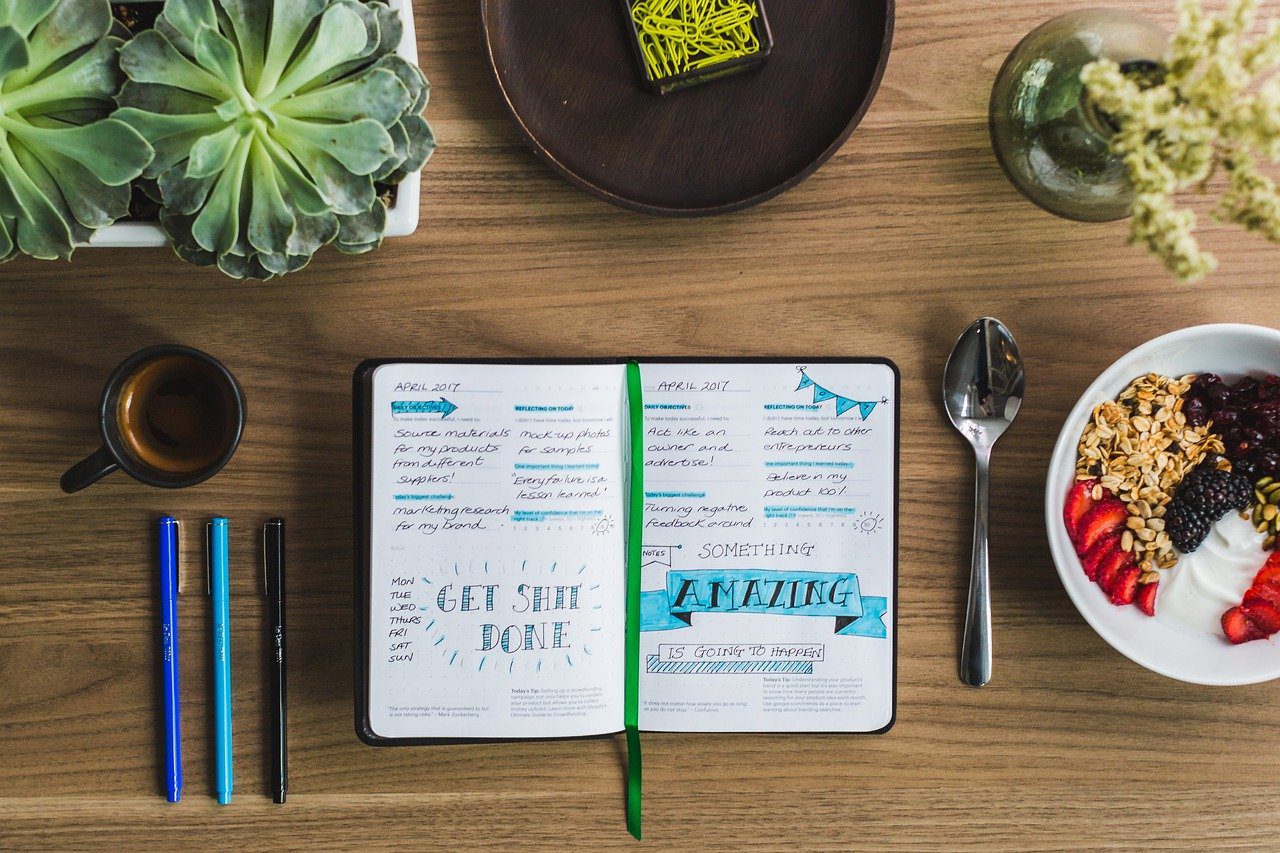
    You may have heard about this latest craze but have you ever really explored what journaling is and how it can have huge benefits for your mental health? 
    Journaling basically means keeping a record of your feelings, thoughts and goals surrounding your day to day life.  
    TEN TOP TIPS ON WHY JOURNALING IS GOOD FOR YOU:

    1. It helps you plan and achieve goals.
    2. It boosts your memory.
    3. It helps you recall triggers or problems and how to cope with and conquer them.
    4. It reduces stress and helps you unwind as putting things down in black and white stops you ruminating over them.
    5. Expressive writing has been shown to improve liver and lung function and combat certain diseases.
    6. It improves your mood and gives you an overall feeling of well-being.
    7. It helps you to be more mindful and live in the present time.
    8. It aids positive thinking and positive self-talk.
    9. It is a great place to store life-changing tools that can help you out whenever you need them.
    10. It is a great reference to look back on in tough times.

    TEN TOP TIPS ON THE MUSTS OF JOURNALING:

    1. Make it a habit. A small entry each day is best.
    2. Date every entry.
    3. Be positive.
    4. Always note down things you are grateful for or things that make you happy.
    5. Jot down anything, anywhere or anyone that makes you feel good.
    6. Always write down any progress you make, however small it seems to be.
    7. Keep every journal you write, highlight and read over any important helping hints.
    8. List goals and then tick them off as you do them. Make these small and achievable to begin with. Remember that small steps lead to great journeys.
    9. Use colours/pictures anything that is appealing to the eye.
    10. Don’t forget to compliment yourself. Add your qualities and strengths as well as notes on any improvements you would like to make to your life.

    So there you have it. All you need to do now is invest in a Journal, this can be as simple or fancy as you like. A basic notebook can be just as good as a leather-bound hardback.  Pull out some materials; pens, crayons, glue, cutouts etc and make a start. Why put off until tomorrow something that you are going to benefit from today?

    HAPPY JOURNALING! 

  • Mask Wearing & Anxiety

    Mask Wearing & Anxiety

    Does covering your face trigger anxiety for you? You are not alone!

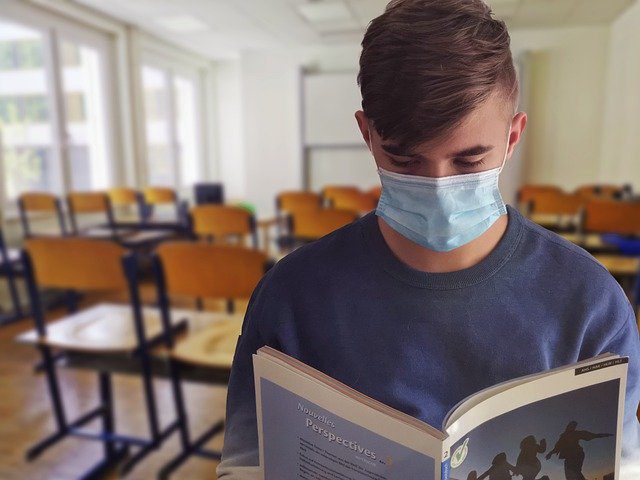
    With new laws now in place recommending everyone throughout the United Kingdom to cover their mouth and nose with some kind of face covering in public spaces where social distancing is not always possible, many are experiencing an increase in their anxiety.  Some people are finding that wearing a face covering can trigger panic attacks due to the feeling that their breathing is limited because of restricted airflow which can easily be compared to a sense of suffocation. Also any face covering will automatically make the face warmer and anxiety sufferers could misinterpret the rise in temperature as a trigger for a panic/anxiety attack.   

    You may be pleased to know that in certain circumstances you may be exempt. According to the new government regulations you do not need to wear a face covering in England if you have a legitimate reason not to. This may include:

    • not being able to put on, wear or remove a face covering because of a physical or mental illness or impairment, or disability
    • if putting on, wearing or removing a face covering will cause you severe distress

    People with the following health conditions are also exempt:

    • breathing difficulties or respiratory disorders
    • conditions affecting dexterity, which means you are unable to put on a mask
    • mental health conditions such as anxiety or panic disorder
    • learning difficulties such as autism
    • cognitive impairments such as dementia which mean patients may not understand or remember the need to wear a mask
    • visual impairments
    • conditions that mean putting a face mask on would be too painful

    In these cases you may feel more comfortable showing something that says they do not have to wear a face covering. This could be in the form of an exemption card, badge or even a home-made sign. If you would like to find out more about making your own face covering or how to print out an exemption card you will find more information here: https://www.gov.uk/government/publications/face-coverings-when-to-wear-one-and-how-to-make-your-own

    Here are a few tips that might help make things a little easier during these unprecedented times:

    • Change your mind set Masks are purposely made for protection. To keep yourself and others safe People in the medical profession have safely been using them for over a hundred years.
    • When wearing a face covering, try to avoid rapid, shallow breathing. Instead, focus on breathing from your diaphragm, check out this short animation: https://nopanic.org.uk/correct-breathing/
    • Try wearing your mask around the house for short periods to get used to how it feels. Maybe while watching a good TV program or while doing a favourite hobby. Start off with just a minute or two and increase the period slowly over time.
    • There are also a huge variety of masks out there, different shapes; fabrics sizes etc. What might suit one person could feel very uncomfortable on someone else, so try a few out before you decide.

    If you would like to find out more about the new Face covering regulations you can visit the official UK government’s site here: https://www.gov.uk/government/publications/face-coverings-when-to-wear-one-and-how-to-make-your-own/face-coverings-when-to-wear-one-and-how-to-make-your-own

  • Diet And Anxiety

    Diet And Anxiety

    Our diet can play an important role in helping anxiety.


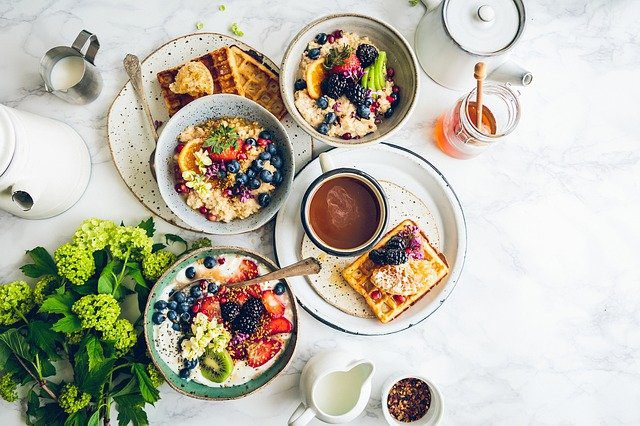
    Diet is very important when it comes to anxiety. It is very easy to eat too little or too much. An anxious person might eat for comfort or find it difficult to actually swallow food. So let’s look at how you can help yourself by adjusting what you eat.

    Carbohydrates are the perfect food to give staying power, they also increase the production of serotonin otherwise known as the happiness hormone. Perfect examples of carbohydrates are brown bread and brown rice/pasta.

    Studies have shown that foods containing Vitamin B can lift our mood. Foods that are rich in vitamin B include meat such as beef, pork and chicken. Leafy greens vegetables and citrus fruits as well as nuts and eggs. These studies also show that omega-3 fatty acids found in fatty fish such as salmon, tuna, herring, mackerel, anchovies, and sardines, can be uplifting and enhance your mood.

    Protein can help improve mental energy and can be found in Greek yogurt, fish, meats, cheese, eggs, nuts, beans, soy, and lentils.

    Water makes up on average 60 – 70 percent of the human body, it carries hormones and nutrients to their destinations, so when fluid consumption is reduced this procedure starts to slow down causing many bodily dysfunctions.  Blood pressure may drop which can lead to dizziness. A faster heartbeat may be experienced as the heart tries to increase low blood pressure.  With less water in the body, our bodies produce fewer digestive juices than we need for digestion. This can lead to gas, constipation, loss of appetite and nausea. Urine becomes more concentrated, which can lead to infection. Without sufficient water, the brain will suffer. Leading to headaches and tiredness. Muscles may seize up or feel weak. Water also regulates body temperature, cushions joints and lubricates eyes. So you can see why it is really important to keep your body hydrated every day not just throughout the summer months.

    One last thing is the importance of breakfast. It has this name for a reason; BREAK the FAST. After a night’s sleep, our body needs re-fuelling to face the day So however hard it may be for some people, it is essential to eat something after getting up, a slice of toast, porridge of even a banana.

    So now let’s have a look at things to avoid or at least reduce;

    Caffeine

    Caffeine can increase your heart rate which could trigger feelings of panic. It can also have a depressing effect. Caffeine is also a diuretic making you urinate more often, which could lead to mild dehydration, which we have already spoken about. Another problem with caffeine is that it is a stimulant which can keep you awake, leading to tiredness which then leads to more issues!

    Sugar

    The bloodstream absorbs sugar very quickly which can provide a sudden energy boost. The problem is, the surge wears off very quickly and you are left tired and deflated.

    Alcohol

    Having a drink or two might seem like a good idea to ease anxiety or erase negative thinking but in fact, it can have the opposite effect as alcohol is a depressant and a diuretic.

    POINTS TO FOCUS ON:

    • Food is energy,  therefore important in the upkeep of our body and the way it functions. You wouldn’t expect your car to run properly without it having the proper fuel, it is the same for your body. 
    • It is always a good idea to keep a food diary. Note down everything you consume and then you have a record that you can look back on to see if anything, in particular, triggers your anxiety or general mood.
    • Remembering that each of these good and bad things we have discussed can affect everybody differently but in general the better your diet, the better your body will function.

    How can No Panic help?
    No Panic specialises in self-help recovery and our services include:
    Providing people with the skills they need to manage their condition and work towards recovery.
    Our aim is to give you all of the necessary advice, tools and support that you will need to recover and carry out this journey. No Panic Recovery Programs

  • Dehydration and Anxiety

    Dehydration and Anxiety

    Many things can aggravate or trigger anxiety and dehydration is one of them. When our bodies are dehydrated they do not function as well. Water makes up on average 60 – 70 percent of the human body, it carries hormones and nutrients to their destinations, so when fluid consumption is reduced this procedure starts to slow down causing many bodily dysfunctions.

    Blood pressure may drop which can lead to dizziness. A faster heartbeat may be experienced as the heart tries to increase low blood pressure.  With less water in the body, our bodies produce less digestive juices that we need for digestion. This can lead to gas, constipation, loss of appetite and nausea. Urine becomes more concentrated, this can provoke infection.

    Without enough water the brain will not work as it should and this can bring on headaches and tiredness. Muscles may seize up or feel weak. Water also regulates  body temperature, cushions joints and lubricates eyes.

    So you can see why it is important to keep your body hydrated not just in warm weather but all year round.

  • Coming out of lockdown

    Coming out of lockdown

    As many people are feeling excited about getting out and about again, meeting up with family and friends and even planning holidays after being in lockdown for so long, for others, it’s not such a bright prospect.

    In a recent survey by No Panic, 85% of you said your biggest fear was either yourself or a family member catching the virus.  With lockdown restrictions slowly being lifted the main concerns were having to go back to work, using public transport and sending children back to school. 

    All these worries are completely normal when you think about how ‘out of the ordinary’ this past year has been.  Our televisions, social media feeds and conversations have been flooded with nothing but Covid_19 and everything that goes with it, 24 hours a day, 7 days a week.  The uncertainty of the whole situation has unsettled our everyday lives causing negative thinking and increased anxiety. 

    So how do we get ourselves back to some kind of normality?
    How do we step out into the world again and start to socialise? 
    How do we stop our fears taking over our lives?

    • The first thing to remember is that we are all in this together. You are not alone with your worries. Don’t be afraid to speak out and share what you are feeling. 
    • Try not to let negative thoughts about what may happen wander around in your mind. Focussing on the bad will only make your anxiety worse.  Take each day as it comes. Do the best you can, with what you have.
    • Take care of your body. Looking after your physical health can reduce stress and anxiety as well as improving your mood.  This should include exercise, sleep and diet. 
    • Calm your mind. Meditation and mindfulness are ideal for this but there are many other things to try. Colouring, painting and reading are a few examples. Listening to soothing music or a relaxing podcast are also ideal. Try the No Panic Breathing animation.
    • Take things step by step. Moving forward slowly is better than staying where you are.  Meet up with one or two friends to begin with instead of a group? Maybe you will be able to continue to work from home on a part-time basis? Maybe you could car share instead of using public transport immediately? Look for solutions instead of focussing on problems. 
    • Limit your social media and news intake. Not everything you read is true. Follow accounts that make you feel positive and have a clear out any negative people.
    • Remember you have done this before. When the lockdown was put into place, you adapted to a new routine with many life changes. As restrictions are being lifted, once again changes will happen and you will adapt once more. 
    • Lastly, if you feel you need further help, take a look at the links below.  

    If you are worried about going back to work, take a look at the UK Government’s Working Safely Guidance.

    If you are worried about sending your children back to school, take a look at the UK Government’s Education and Childcare Guidance.

    If you are worried about your financial situation, take a look at The Money Advice Service.

    How can No Panic help?
    No Panic specialises in self-help recovery and our services include:
    Providing people with the skills they need to manage their condition and work towards recovery.
    Our aim is to give you all of the necessary advice, tools and support that you will need to recover and carry out this journey. No Panic Recovery Programs

  • Summer Anxiety

    Summer Anxiety

    Summer is on its way, so as the hot, sunny days spread into longer evenings. Everyone is happy and in the holiday mood.

    Actually that isn’t the case for everyone. Some people find their anxiety worsens during the summer period. Certain anxiety sufferers find that as summer progresses, the increased temperatures can induce effects which are similar to anxiety symptoms. These might include sweating, tiredness, nausea, dehydration, restlessness, palpitations and shortness of breath. Add on to this that the rest of the population seem to be out having fun in the sun with entertaining, picnics and trips to the coast and the pressure is on!

    So, how can you help yourself get through the summer season?

    1. Keep your body cool by wearing loose, cotton clothing. Choose light colours that reflect heat rather than dark ones that absorb it.
    2. Use a fan to keep the bedroom cool at night.
    3. Drink plenty of water. Dehydration is known to trigger anxiety.
    4. Stay out of the kitchen. Summer is not the time to be whipping up casseroles and roast dinners. Swap them instead for salads and lighter meals.
    5. Take cool showers or fill the bath with cool water that you can dip into throughout the day.
    6. Spritz yourself. Fill a spray bottle with cool water and spray yourself for an instant cooling effect.
    7. Keep windows and curtains closed through the hottest part of the day. Open up when the sun has gone down.
    8. Try to avoid going out in the heat of the day, between 10am and 3pm is when the sun is at its hottest.
    9. Go barefoot when possible. Footwear will make your feet sweat which then raises your overall body temperature.
    10. When away from home, wear a hat and be armed with a pocket fan and cool water.

    Last but not least, don’t be too hard on yourself. This will just make things worse. Other people may be out having fun and mingling around the barbecue but right now it’s your mental health that is important. Talk to yourself kindly and be patient.  Your life is a work in progress. Practice positive thinking on a daily basis in the knowledge that changing the way you think takes time.  Stop comparing yourself to others. Accept yourself for who you are. We all have good and bad qualities as we are all individuals. Simply focus on being the best version of you.

    If you feel that you need a bit more help or support for your anxiety then please email us on sarah@nopanic.org.uk  Or if you would like to work on your recovery from any anxiety disorder then maybe you would like to take a look at our one to one mentoring service.

  • Relaxation Technique

    Relaxation Technique

    Many people confuse relaxation with recreation and thus it is necessary for anxiety disorder sufferers to learn to relax correctly by the elimination of all muscular tension and stress. This is not achieved by just “putting your feet up” but by learning proper muscle relaxation and then practicing it regularly. It should not only be used when a sufferer feels panicky or stressed out but should become a regular part of everyday life as a prevention mechanism.

    Relaxation is the exact opposite of tension which means, that if you practice relaxation on a regular basis, many of your symptoms of nervous tension will disappear. After a fair amount of practice in relaxation, you should have no difficulty falling asleep and your sleep will be deeper and more restful. You will also find that you have more energy for work and play. There should be an improvement in your concentration and mental alertness. Deep relaxation is a skill that is not learned in a day – the more you practice the sooner you will feel the benefits.

    Do not expect to be able to relax properly on the first attempt. Like any other skill, it takes time and practice to learn.

    This program is designed so that, by learning the difference between tension and relaxation of the muscles, during the program, you will be able to notice when you are getting tense or anxious in everyday situations and you will then have the ability to get rid of the tension and anxiety by relaxing the appropriate muscles there and then.

    It is important that you learn to use this method in your everyday life. To do this, you need to learn to carry out “differential” relaxation. This means having the ability to relax any particular group of muscles at any one time. It is therefore essential that you learn these exercises off by heart so that, wherever you are, you can notice tension arising and take immediate action to remove it. For example, you can relax your arm muscles whilst walking along the road and you can relax your leg muscles whilst sitting on a bus.

    When you practice deep relaxation, it is important to be in a quiet, warm place where you will not be disturbed, have your clothing loose, be either sitting or lying down, your arms by your sides and your legs uncrossed.

    You are now ready to begin the exercise. Do not try too hard as this can bring on tension but allow the relaxation to just happen without forcing it. In the beginning, some people try too hard and consequently they get more tense and panicky. This is perfectly normal and will pass as your body becomes accustomed to being properly relaxed. Follow the instructions but take things slowly.

    You should practice this relaxation program at least twice a day until you know it off by heart and are able to relax any set of muscles at any time.

    Try to keep your mind focused on the word relax. Keep your breathing regular, shallow and relaxed. Don’t hold your breath and, notice how as you breathe out, you relax a little more. Keep your eyes closed. Breathe in and out through your nose and each time you breathe out relax a little more. Keep concentrating on the word relax.

    The following exercises demonstrate the difference between tension and relaxation.

    1. The muscles in your hands and forearms:

    You tense these muscles by clenching your fists as tightly as you can.

    • Start now and count steadily to five, notice the tension.
    • Relax your fists.
    • Notice the difference between tension and relaxation in your hands and forearms.
    • Keep focusing on the word relax.

    2. The muscles in your upper arms:

    You tense these muscles by bending your arms at the elbows and trying to touch your wrists to your shoulders.

    • Start now and count steadily to five, notice the tension.
    • Relax your arms.
    • Notice the difference between tension and relaxation in your upper arms.
    • Keep focusing on the word relax.

    3. The muscles in the back of your arms:

    You tense these muscles by straightening your arms as hard as you can.

    • Start now and count steadily to five, notice the tension.
    • Relax your arms.
    • Notice the difference between tension and relaxation in the back of your arms.
    • Keep focusing on the word relax.

    4. The muscles in your shoulders:

    You tense these muscles by shrugging your shoulders tightly into your neck.

    • Start now and count steadily to five, notice the tension.
    • Relax your shoulders.
    • Notice the difference between tension and relaxation in your shoulders.
    • Keep focusing on the word relax.

    5. The muscles in your neck:

    You tense these muscles by pressing your head back as far as you can.

    • Start now and count steadily to five, notice the tension.
    • Relax your neck.
    • Notice the difference between tension and relaxation in your neck.
    • Keep focusing on the word relax.

    6. The muscles in your forehead:

    You tense these muscles by raising your eyebrows as though enquiring.

    • Start now and count steadily to five, notice the tension.
    • Relax your eyebrows.
    • Notice the difference between tension and relaxation in your forehead.
    • Keep focusing on the word relax.

    7. The muscles in your brows and eyelids:

    You tense these muscles by frowning and squeezing your eyes tightly shut.

    • Start now and count steadily to five, notice the tension.
    • Relax your brows and eyelids.
    • Notice the difference between tension and relaxation in your brows and eyelids.
    • Keep focusing on the word relax.

    8. The muscles in your jaw:

    You tense these muscles by clenching your teeth as hard as you can.

    • Start now and count steadily to five, notice the tension.
    • Relax your jaw.
    • Notice the difference between tension and relaxation in your jaw.
    • Keep focusing on the word relax.

    9. The muscles in your tongue and throat:

    You tense these muscles by pushing your tongue against the roof of your mouth.

    • Start now and count steadily to five, notice the tension.
    • Relax your tongue.
    • Notice the difference between tension and relaxation in your tongue and throat.
    • Keep focusing on the word relax.

    10. The muscles in your lips and face:

    You tense these muscles by pressing your lips together tightly.

    • Start now and count steadily to five, notice the tension.
    • Relax your lips.
    • Notice the difference between tension and relaxation in your lips and face.
    • Keep focusing on the word relax.

    11. The muscles in your chest:

    You tense these muscles by taking a deep breath and holding it

    • Start now and count steadily to five, notice the tension.
    • Relax your chest by breathing out.
    • Notice the difference between tension and relaxation in your chest.
    • Keep focusing on the word relax.

    12. The muscles in your stomach

    You tense these muscles by making your stomach muscles hard as though expecting a punch.

    • Start now and count steadily to five, notice the tension.
    • Relax your stomach.
    • Notice the difference between tension and relaxation in your stomach.
    • Keep focusing on the word relax.

    13. The muscles in your hips and lower back:

    You tense these muscles by arching your back and clenching your buttocks.

    • Start now and count steadily to five, notice the tension.
    • Relax your hips and lower back.
    • Notice the difference between tension and relaxation in your hips and lower back.
    • Keep focusing on the word relax.

    14. The muscles in your legs and feet:

    You tense these muscles by straightening your legs and pointing your toes down.

    • Start now and count steadily to five, notice the tension.
    • Relax your legs and feet.
    • Notice the difference between tension and relaxation in your legs and feet.
    • Keep focusing on the word relax.

    Now completely relax for 10-15 minutes and let the feeling of relaxation spread throughout the whole of your body. Keep focusing on the word relax and enjoy that feeling of deep relaxation. Try and return to your daily activities keeping the body as relaxed as you can.

    You can get an audio version of this Relaxation Technique.

    How can No Panic help?
    No Panic specialises in self-help recovery and our services include:
    Providing people with the skills they need to manage their condition and work towards recovery.
    Our aim is to give you all of the necessary advice, tools and support that you will need to recover and carry out this journey. No Panic Recovery Programs


  • Phobias

    Phobias

    Phobias are one of the most common types of anxiety disorders.    A phobia is an obsessive, intense and extreme fear of an object, place, situation or creature. People with phobias have developed an irrational apprehension about something they perceive as a danger.

    Phobias centre on our normal fear mechanism, so someone who has a phobia is perfectly normal except that they have learnt to get frightened at the wrong times or in the wrong places. The nervous system, which carries messages to and from the brain, is continually telling the brain of a phobia sufferer, that there is something to be frightened of when they are in their ‘trigger’ situations or places, even when there is no real danger present. We logically know there is no actual danger as the danger only feels real to the sufferer and not anyone else.

    Fear is a natural response in all of us. It keeps us safe by making sure that, most of the time, we are not in dangerous situations. However, sometimes when we are not thinking about what we are doing we do things that are dangerous, e.g. stepping off the pavement without looking and consequently nearly getting knocked down. The shock to our system, when something like this happens, is enormous and very unpleasant. We sweat, shake, tremble and feel sick and our heart pounds.   As the vehicle, gets closer, it will probably sound its horn and our ‘fear’ response (taking flight) gets us out of danger. Without the ‘fear’ response we would have just stood in the road.

    Fear is something we learn. When you see a child run onto a busy road, they have not yet fully learned the ‘fear’ response. The only thing they focus on is their ball rolling onto the road and so they rush out oblivious to the oncoming dangers. So clearly ‘fear’ in the right place is essential to our well-being.

    It is only when some kind of traumatic event triggers panic and the person goes on to attach the awful symptoms they are experiencing with their surroundings, situation or object around them that a phobia might develop.

    The good news is Phobias, like all anxiety disorders, can be overcome. It is all about proving that what you are phobic of can not harm you, finding the evidence to prove this, and using some essential tools and steps desensitise the ‘fear’ trigger in your body.

    How can No Panic help? No Panic specialises in self-help recovery and our services include:
    Providing people with the skills they need to manage their condition and work towards recovery.
    Our aim is to give you all of the necessary advice, tools and support that you will need to recover and carry out this journey. No Panic Recovery Programs