Category: Articles by No Panic Volunteers

  • OCD Awareness Week

    OCD Awareness Week

    No Panic is honoured to be teaming up with OCD-UK for OCD Awareness Week from the 10th – 16th October to not only help raise awareness but also share some great information and even do a bit of myth-busting !!

    Each and every one of us has a part to play in improving the lives of those experiencing mental health difficulties. We can all do our bit by listening, talking and encouraging those in need to reach out and get the help they need.

     Obsessive-Compulsive Disorder

    “Information plays an important role in helping people understand and come to terms with Obsessive-Compulsive Disorder (OCD). We’re here to educate, offer hope and support people through the difficult times, right through to recovery and everything in between.”OCD-UK.

    We have a brand new video for you over on our YouTube channel each day over the next week where Ashley Fulwood – CEO of the charity OCD-UK will be sharing his expertise and advice. Check out what we have coming:

    • Sunday 10th – What is OCD and what isn’t it?
    • Monday 11thHelp I think I have OCD, what do I do? 
    • Tuesday 12thLanguage around OCD
    • Wednesday 13th Ways in which OCD impacts
    • Thursday 14thWhat about the darker side of OCD?
    • Friday 15thOCD in children and young people
    • Saturday 16th –  Seven quickfire facts about OCD 

    Find out more on : Facebook Twitter InstagramYouTube

    #strongertogether

  • Agoraphobia – The Whats & Whys

    Agoraphobia – The Whats & Whys

    What is agoraphobia?

    Agoraphobia is an anxiety disorder that is strongly correlated with panic disorder. The would agoraphobia comes from the Greek and basically means “fear of the market place” but the condition can be related to all sorts of situations and places and is a much more complex problem. 

    To use the NHS definition, agoraphobia is a fear of being in situations where escape might be difficult or that help wouldn’t be available if things go wrong.

    Agoraphobia is fairly common – 7% of women and 3% of men suffer from the disorder during their lives.

    What are the symptoms of agoraphobia?

    Most people with agoraphobia have experienced panic attacks. The symptoms of agoraphobia are mainly around reassurance.  People who have had a panic attack in a particular situation fear revisiting that location and the avoidance build over time. 

    The symptoms are a multitude, such as:

    • Avoiding public transport
    • Getting anxious in a traffic jam
    • Sitting at the end of the seats in a cinema
    • Avoiding other people’s houses
    • Finding it hard to be alone at home
    • And eventually, being too afraid to even leave the house.

    Why do people develop agoraphobia?

    In general, people develop panic disorder before agoraphobia.  The way that people cope with the anxiety is key – some people naturally face their fears whereas others retreat. People with separation anxiety and agoraphobia may only leave the house when accompanied. 

    Stressful experiences like a death in the family or a change at work often occur before the onset of panic attacks and agoraphobia. Some people are vulnerable to anxiety in life, but it is a trigger that spirals the panic and brings on a panic attack.

    What keeps the vicious cycle going?

    The way that anxiety builds into a trigger is through self-perpetuating factors. In anxiety, the worry is a fear of fear. We get stuck in the fight or flight process and it feels like the only way out is to avoid the situation. Your body “remembers” your reaction and it is reinforced. We can divide the perpetuating factors into three classes – 

    • Psychological factors
    • Coping strategies
    • Negative thinking 
    • Low self-esteem

    • Social factors
    • Pressure at work or home
    • Being alone
    • Physical factors
    • Poor sleep
    • Use of drugs or caffeine 

    Most importantly, how is agoraphobia treated?

    Like most anxiety disorders (actually, all anxiety disorders!), cognitive behavioural therapy is the gold standard treatment. Cognitive therapy looks to challenges beliefs  (such as “I am going to get trapped in the supermarket queue and have a panic attack”). It helps us to challenge these thoughts by using Theory A/Theory B or the downward arrow.

    The behavioural part of CBT is exposing yourself to feared situations. You might start slowly, such as going to see an old friend or going for a walk in a park, before moving up to trickier tasks such as going alone to a cinema and not sitting at the end of the row or going to the supermarket on your own.

    What can we take from that?

    You don’t have to suffer in silence (you can always join one of the No Panic support services or recovery groups) and most importantly, you can recover. You deserve to recover and although it might be hard (and I’m not hiding that it can be tricky), you can recover.

    Bellsie

    More Reading: https://nopanic.org.uk/agoraphobia/

    Watch our YouTube Video on agoraphobia: https://youtu.be/fhqTOnCb0p0

    How can No Panic help?
    No Panic specialises in self-help recovery and our services include:
    Providing people with the skills they need to manage their condition and work towards recovery.
    Our aim is to give you all of the necessary advice, tools and support that you will need to recover and carry out this journey. No Panic Recovery Programs
  • Self-love is a Super Power

    Self-love is a Super Power

    We all have self-esteem, whether it be low, high or just right (to quote Goldilocks). At the very centre of your self-esteem are your core beliefs, these are the basic assumptions you have of yourself and are usually developed in childhood. If you have high self-esteem they might be “I am confident in making right decisions” or “I am kind and loving to myself because I am worth it”. For people with low self-esteem they may believe “I am not worthy of other people’s attention or love” or “I am not entitled to the good things in life’.

    Self-esteem is the vision that we have of ourselves, the value that we give to our thoughts and behaviours and how we see ourselves as people. Self-esteem goes alongside self-confidence or self-efficacy – defined by the fact that they are confident in their abilities (e.g. I make an excellent Victoria sponge).

    Low self-esteem can make life pretty tough and miserable. It can feel like a constant battle throughout life. A person with low self-esteem may show some of the following behaviours:

    • Unable to make eye contact
    • Avoid certain situations
    • Fear of failure
    • Scared of trying new or difficult things
    • Unmotivated in taking care of oneself
    • Feeling guilty
    • Negative self-talk
    • Comparing oneself to others

    This can all have a huge impact on your emotions: (sadness, anger, anxiety etc.) and physically: (low energy, tension).

    Self-esteem is treatable. Here are a few things you might like to try:

    • Treat yourself as you would a good friend. Think about the way you talk to yourself, would you speak to your friend like that? Learn to compliment yourself.
    • Learn to accept compliments instead of brushing them aside, thank the person and smile.
    • Avoid comparing yourself to others. Remember that everyone is fighting their own battle and what people share, (especially on social media) is not their true self.
    • Practice assertiveness. Learn to say no, this doesn’t have to be in an abrupt way but perhaps use phrases like: “Sorry, but I really don’t have time this week” or “Unfortunately, I am going to have to decline on that one”.
    • Celebrate the small things. Achieving goals, no matter how small is a good way to boost your self-esteem. Give yourself praise and even make a note of small successes.
    • Look after yourself. Make sure that you are getting enough Sleep, have a look at your Diet, take regular Exercise, consider Goal Setting and have a go at Mindfulness

    Whatever it takes to change those core beliefs ingrained in your mind. Have a go. Walk away from the negative behaviours and use whatever tricks and tips that you need. You are worth it. ?

    How can No Panic help?
    No Panic specialises in self-help recovery and our services include:
    Providing people with the skills they need to manage their condition and work towards recovery.
    Our aim is to give you all of the necessary advice, tools and support that you will need to recover and carry out this journey. No Panic Recovery Programs

  • Anxiety Sufferers Answer Questions On Panic Attacks

    Anxiety Sufferers Answer Questions On Panic Attacks

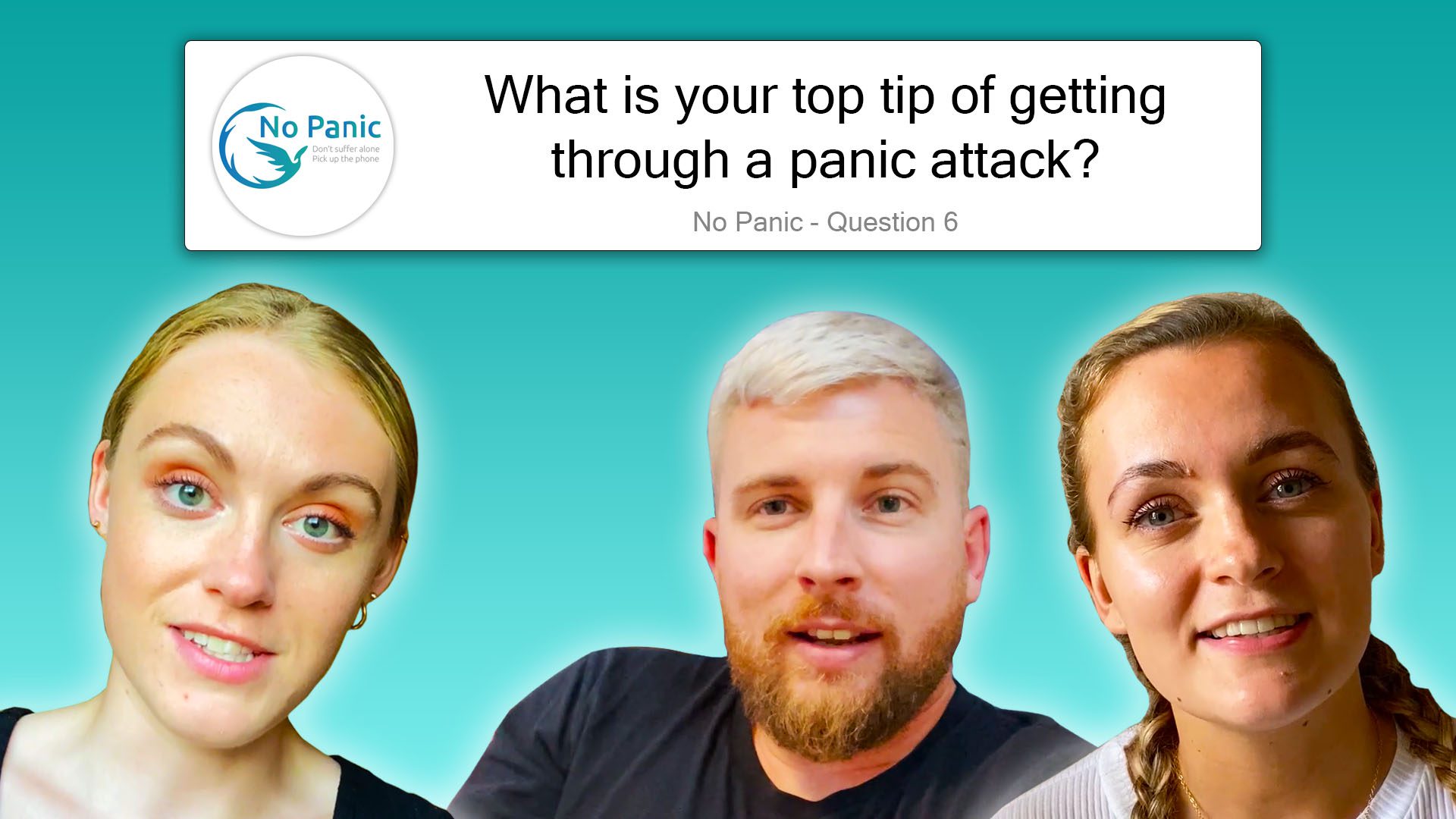
    Panic attacks are the most common subject that people come to us about here at the charity, which is why we teamed up with Dan from Mint Jelly Media to work on this project. By putting together a short video of people or have lived with anxiety we are hoping to help break down the stigma and get others to open up about the challenges panic attacks bring.

    You can watch the video here…..

    A huge thank you to Dan from Mint Jelly Media – Video Production Company https://www.mintjellymedia.co.uk/ and all the participants for helping us make this project a reality.

    How can No Panic help?
    No Panic specialises in self-help recovery and our services include:
    Providing people with the skills they need to manage their condition and work towards recovery.
    Our aim is to give you all of the necessary advice, tools and support that you will need to recover and carry out this journey. No Panic Recovery Programs
  • What is Mindfulness?  Interview with Bellsie

    What is Mindfulness? Interview with Bellsie

    So Bellsie, I can see that you’re desperate to start. So what on earth is mindfulness?

    Mindfulness was defined by Jon Kabat-Zinn, an American doctor who first conceived the Mindfulness-Based Stress Reduction (MBSR) course as; “paying attention in a particular way: on purpose, in the present moment, and non-judgmentally.” (Kabat-Zinn, 1994)

    What does that actually mean in practice?

    There are all sorts of different ways that mindfulness can be incorporated into daily life – from mindful breathing and body scans exercises to carrying out your normal activities (eating, getting dressed or even driving.

    Mindfulness is not a relaxation technique. There’s no tinkly music or whale song. It’s more a way of living.

    In some ways, mindfulness can be thought of as the contrary of the incessant rumination that develops with anxiety, choosing to observe the thoughts that pass through without passing judgment or interpreting their meaning.

    And how would that help with anxiety?

    Potentially it could help in different ways for different people. The main way that mindfulness has helped me is reducing thought-action fusion and thought suppression, but people also might just find that it makes them calmer and helps them to deal with stress in a more healthy way.

    Wait a second, what on earth is Thought-Action Fusion?

    Thought-action fusion (TAF) is a pretty common cognitive distortion that is often present in individuals living with anxiety, in particular, OCD and that falls within the larger category of magical thinking.

    What’s magical thinking? That sounds fun!

    Magical thinking is the attribution of causality to unrelated events and is the root of non-clinical superstitious behaviour as well as a component of anxiety and something that we all do.

    You mean like touching wood or saluting a magpie?

    Yep. Thought action fusion is a type of magical thinking and it comes in different types.

    Thought-action fusion can for example be defined as the belief that ‘having an unwanted, unacceptable intrusive thought increases the likelihood that a specific adverse event will occur ’ (which is known as likelihood thought-action fusion), or maybe ‘that having an unacceptable intrusive thought is almost the moral equivalent of carrying out that particular act’, (known as moral thought-action fusion) (Shafran & Rachman, 2004).

    So it’s like thinking of killing someone is as bad as doing it? Or that thinking about someone having an accident makes it more likely?

    Exactly. Mindfulness can be effective in helping the individual to view their thoughts as temporary and objective.

    And what about thought suppression?

    Thought suppression is exactly what it says on the tin – pushing away thoughts and trying as hard as you can not to “think” them.

    That makes sense though, doesn’t it? I mean if you have a thought that you don’t want then you should push it away, right?

    One of the defining characteristics of intrusive thoughts in anxiety is that they are seen as distressing and unwanted by the sufferer. The act of thought suppression is paradoxical in that the harder one tries not to think of something, the more frequent the thought becomes.

    Really?

    Yes. Let’s do a quick experiment (this is one of my favourite examples!). I want you to try your hardest not to think of a pink elephant for a whole minute. Are you ready? Go.

    Well that didn’t work.

    No. You see, it’s like I said – the harder you try not to think about something, the stronger it becomes.

    Research has shown that not only is a tendency towards thought suppression correlated with obsessional thinking, but also that people with anxiety and particularly OCD are more likely to put the inevitable failure to suppress their thoughts down to their own personal psychological weakness (Tolin et al. 2002).

    Mindfulness, as I said earlier, invites individuals to regard their thoughts as temporary and objective. Instead of trying to push the thoughts away, mindfulness teaches people to experience the thoughts without judging them or trying to control their content or frequency. One could argue that mindfulness would therefore prevent the thought suppression paradox from occurring.

    So are you saying that mindfulness could be used to treat anxiety?

    The current research findings indicate that mindfulness has a potentially positive effect in the treatment of anxiety, generally when integrated with CBT.

    One possible criticism of mindfulness is that it could become a form of neutralisation, thus becoming a ritual itself and reducing the effect of ERP interventions. It is important therefore to clarify that mindfulness is neither a distraction technique nor a relaxation exercise, but a state of mind, congruent with the immediate reality.

    Wow Bellsie! That sounds really interesting! Where can I find out more about mindfulness?

    Why thank you! There will very likely be courses going on around where you live, but you can also find all sorts of resources online.

    Check out Be Mindful – full of interesting things.

    I would also read Jon Kabat-Zinn’s book Wherever You Go, There You Are or listen to one of the many audio recordings out there.

    But above all – don’t be scared to give it a go. And keep at it – even just for a week or so. You might discover that it isn’t for you, but you might also find that it opens up a whole new way of living.

    You might like to try this No Panic audio to give you a taster: https://nopanic.org.uk/a-moment-of-mindfulness-video/

    How can No Panic help?
    No Panic specialises in self-help recovery and our services include:
    Providing people with the skills they need to manage their condition and work towards recovery.
    Our aim is to give you all of the necessary advice, tools and support that you will need to recover and carry out this journey. No Panic Recovery Programs

  • After the Storm – Life after Covid-19

    After the Storm – Life after Covid-19

    As the masks come off, social distancing seems like a distant memory and the headlines are no longer Covid based, some of us are left with anxiety or panic in the aftermath. Whether that may be obsessive-compulsive disorder, worried about being contaminated or causing others to catch the illness or people having panic attacks due to the streets getting busy again, it is clear that Covid is still riding roughshod on our mental health.

     For some of us, the lockdown was a positive experience. Given the opportunity to stay at home and avoid anxiety triggers, it was an excuse to allow rituals to reappear and to stay away from panic-inducing situations. 

     So where does that leave us in this post-Covid world? Our symptoms may not yet have gone away but our lives have to return to a semblance of normality. Here are some tips we’ve put together to facilitate those with mental health disorders to reintegrate society gradually and safely.

     CBT (Cognitive Behavioural Therapy) is the gold standard when it comes to dealing with anxiety. Try challenging yourself every day – whether that is a bus ride or just taking ten steps outside your house. Slowly but surely the anxiety will fall and as you push yourself just a little more each day.

     Confinement is also a very lonely experience, especially for those who have to self-isolate. Reconnecting with old friends can be a joyous occasion but it’s also a chance to make new friends. It might not feel like it but there are a lot of people in the same situation as you. Push yourself a little bit past your comfort zone. Always loved singing in the shower? Join a choir! Never miss a footie match? See if you can find a 5-a-side team!

     One important thing to remember is that Covid is not going to disappear. If you have health anxiety it’s easy to fall into the trap of watching the news on a loop and constantly checking facts and figures. We must all avoid Dr Google! If you find that social media and its non-stop intrusion difficult then don’t feel bad turning your phone and computer off until you feel ready to face them again.

     Remember that it will take time to adapt. Nobody expects you to return to the old normal overnight. Mindfulness is a great way to stay in the “new normal” and there are many tutorials on the web or applications on your phone. No Panic will as ever, be here to support you as we take this step forwards together. 

    How can No Panic help?
    No Panic specialises in self-help recovery and our services include:
    Providing people with the skills they need to manage their condition and work towards recovery.
    Our aim is to give you all of the necessary advice, tools and support that you will need to recover and carry out this journey. No Panic Recovery Programs

  • Let’s Talk About Our Mental Health

    Let’s Talk About Our Mental Health

    Each and every one of us has a part to play in improving the lives of those experiencing mental health difficulties. We can all do our bit on helping to break the stigma that surrounds mental health by listening, talking and encouraging those in need to reach out and get the help they need.

    Most of us will have known someone who has struggled with mental health which is why we need to break down the barriers, raise awareness and be aware of our own mental wellness.

    Anyone of us, anywhere can be affected. Did you know that approximately 1 in 4 people in the UK will experience a mental health problem?

    Here are just a few ideas to get things started. Let’s break down the barriers, stamp out the stigma and make ours and everyone else’s mental health a priority.

    • Make contact. Get in touch with someone who is facing challenges. Ask them how they are doing and be a good listener.
    • Send text messages out to family and friends, telling them how much they mean to you.
    • Start conversations about mental health. You might just be surprised how many people are experiencing difficult times too but are also afraid to speak out.
    • Make a plan for the future on how to take better care of your own mental well being. https://nopanic.org.uk/wp-content/uploads/2021/01/NP-Wellness-Toolkit.pdf
    How can No Panic help?
    No Panic specialises in self-help recovery and our services include:
    Providing people with the skills they need to manage their condition and work towards recovery.
    Our aim is to give you all of the necessary advice, tools and support that you will need to recover and carry out this journey. No Panic Recovery Programs
  • Fear Of The Dark

    Fear Of The Dark

    Nyctophobia or phobia of the dark quite often starts at a young age. To some extent this is normal as children quite often fear the unknown or things they cannot see. The fear might go on to become a phobia if thoughts become irrational, excessive, or impacts day-to-day living.

    In this case the first thing to keep telling and reminding yourself of, is that darkness, in itself, cannot harm you and it is important to correctly identify the actual cause of the fear.

    Is it really the dark or is it perhaps things that happen during darkness that are the cause of the problem?

    Perhaps, for example, it is actually a fear of moths which only come out during darkness but you have, over a long period of time, associated the fear with the darkness rather than the moth? Or perhaps you are scared  of what could happen in the darkness? Both of these examples show that it isn’t actually darkness that is the problem. 

    So now let us take a look at what you can do to overcome this phobia, afterall;All phobias can be overcome by desenstising the mind and body

    It is essential that you remember that by shutting out the darkness, i.e. by putting on all the lights and shutting the curtains to avoid seeing the darkness, you are not ever going to overcome the fear, all you are doing is  coping and so prolonging the phobic reactions.

    The following steps are for an acute sufferer so you can start at whichever point is applicable.

    1. Use “cognitive” thinking to start changing the way your thoughts react to oncoming darkness. Ways to do this would include arguing with yourself so that when the fears of darkness thoughts come into your mind you continually challenge them with the realisation that darkness cannot harm you. Alternatively, you could use an audio recording of real facts. This recording should then be played on a regular basis to continually remind you of the truth. “Cognitive” therapy will eventually change the way you think from negative to positive from “What if?” to “So what”.
    2. Make regular and frequent use of a muscle relaxation CD   It is impossible to feel anxious, worried or  frightened if all the muscle groups in the body are relaxed. Once the muscles are all relaxed, the nerves are inactive and so no messages of fear are transmitted to the brain. It often takes several weeks or even months of practice to get good muscle relaxation so don’t expect the CD to achieve an overnight miracle. The more often you practice, the sooner you will start to relax properly. 
    3. Next, you have to start exposing yourself to the actual darkness. This should be done gradually in order to slowly increase your confidence. The first step might be to buy a light dimmer and slowly but surely reduce its intensity.
    4. Start with one room being slightly darker than any other and keep going in there until your anxiety level reduces which, it must and will. Perseverance is the key.
    5. Slowly but surely increase the darkness level in the room. You can use breathing exercises or No Panic’s Crisis Message to help keep your anxiety levels under control.
    6. Steadily reduce the amount of light you have on throughout your home.Remembering that small steps lead to great journeys.
    7. Practice being in a darkened room during daylight. Using this step actually produces darkness to order and can be very helpful in dealing with the real thing at night times.
    8. Gradually open your curtains bit by bit at night. Start off with only a crack. Make a point of looking at or through the crack. Build up to eventually having the curtains wide open.
    9. Get used to having the lights off during the hours of darkness.
    10. Walk outside during darkness using your recording to keep reminding yourself of the reality that darkness cannot harm you.
    11. Go out into the night or sit in your home with all the lights off.

    Obviously, all the above take time are not learned at once. We admit it takes some people longer than others to overcome the fear. Many darkness phobia sufferers have tackled and overcome their fear by using this type of cognitive/behaviour therapy and don’t forget that the people who have beaten their phobia using this method do not have special abilities, they are just normal people like you and me.

    How can No Panic help?
    No Panic specialises in self-help recovery and our services include:
    Providing people with the skills they need to manage their condition and work towards recovery.
    Our aim is to give you all of the necessary advice, tools and support that you will need to recover and carry out this journey. No Panic Recovery Programs

  • Why Having Pets Keeps Me In Touch With Nature

    Why Having Pets Keeps Me In Touch With Nature

    I was very happy to see that the theme for Mental health awareness week this year is nature! I think this is an excellent theme and as someone who spends a lot of their free time in the great outdoors, I find it particularly relevant. Life, in general, can be full of stress with work, family and everyday life, if you add anxiety and other personal struggles on top of that then life can get very overwhelming. The recent lockdowns have given many people the chance to reconnect with nature and some of those people might not normally have got that chance due to busy lifestyles, so being able to get outside has helped many people cope in isolation at what has been a worrying time.

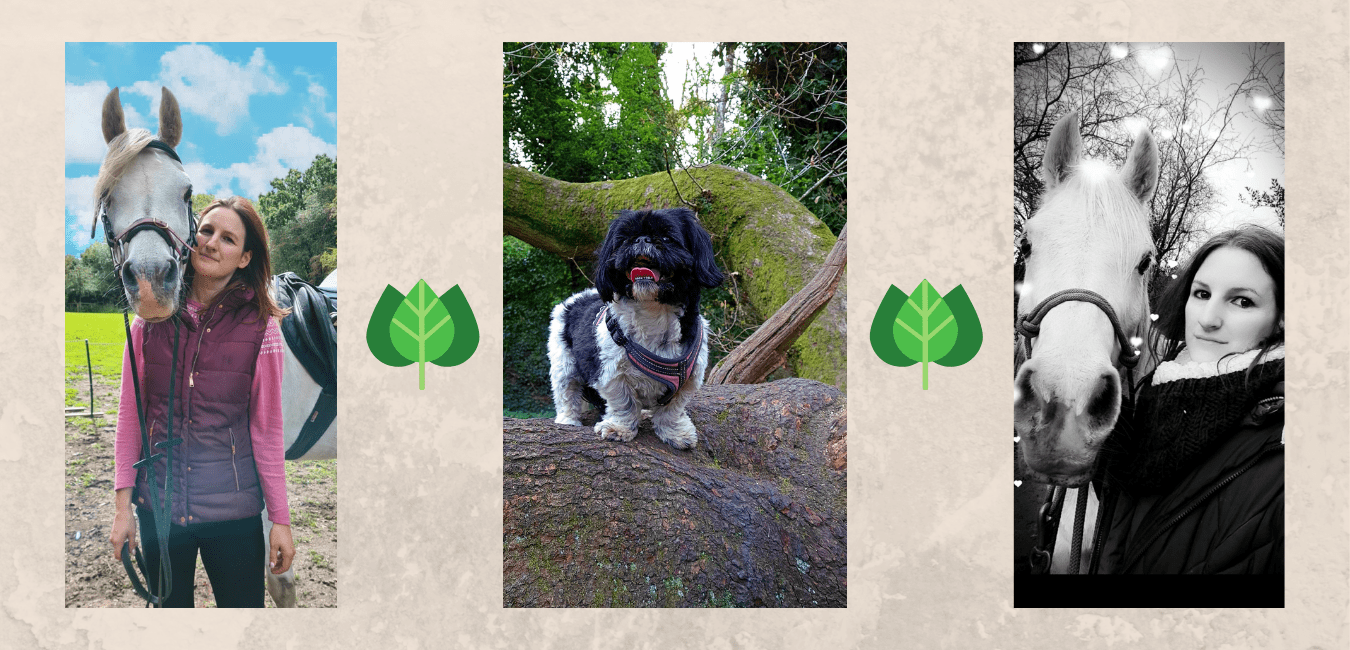
    Personally, I have been lucky enough to have the opportunity to get out on a regular basis. I have owned my horse Sabir for the last 11 years, I keep him in a lovely quiet field next to the local riding school which is also next to a nature reserve and I see him daily. I find my time spent out in such peaceful surroundings allows me to either switch off temporarily from anything that is bothering me or it allows me to think clearly and collect my thoughts and assess situations in a different way. It’s therapeutic and gives me time, space and relaxation.

    I also love taking my little dog Zeewa with me, she loves going on walks and walking anywhere with her is a real mood lifter, she really enjoys herself and I think this also has an effect on me as she’s such good company and is always excited to go out so even if I’m not really feeling like it she’s more than enough encouragement! The combination of doing something that I love with my horse and dog, who I also love, in such peaceful surroundings is extremely beneficial and without a doubt, I always feel better both physically and mentally.

    I would always recommend spending time outdoors if you are able to, even if you don’t have a dog to walk with there are so many lovely places to explore and it’s a chance to escape the hustle and bustle of everyday life and really reconnect with yourself and nature, it’s a chance to really absorb the sights, sounds and smells and appreciate the world.

    Even if you don’t think you have time, it is a good idea to try and make some time for you and your family outside, you will feel and see the benefits.     

    By Michelle D’Ambrosio Office Manager at No Panic 


  • Mental Health Awareness Week

    Mental Health Awareness Week

    Mental Health Awareness week runs from the 10th to the 16th of May and this year’s theme is ‘nature’ and the benefits it can have on our mental health and general wellbeing. Being out of doors surrounded by nature can have a profound impact on our brains and the way we think as natural light increases positive emotions. Here are a few more reasons why you should be spending more time outside. Walking/running or exercising burns calories and improves circulation which can help weight loss and toning of muscles. Fresh air helps the flow of oxygen through the blood allowing your lungs to work better and strengthen heart muscles. This will automatically boost energy levels and improve self-esteem, mood and even sleep quality. Studies have also shown that spending time outdoors can help strengthen our ability to concentrate, as well as strengthening our immune system.

    Rumination, or focusing on negative thoughts can often lead to anxiety, depression and stress. By getting out into open spaces and being mindful of our surroundings can offer much-needed relief, encouraging you to focus on staying in the moment, being aware of bodily senses and feelings. Notice the nature around you. See the colours, hear the sounds. Smell the odours.

    So whether it is a walk in the park, a stroll by the sea, or a bit of gardening, take some time out of your day to get in touch with nature. Notice how the sun on your face or breathing of fresh air brings feelings of happiness and peace.

    “STOP EVERY NOW AND AGAIN JUST TO NOTICE THE NATURE AROUND YOU”